
Jeju in March: yellow fields, a volcano and the sea women
South Korea's southern island is where spring arrives first. A short guide to a volcanic landscape and a living tradition.
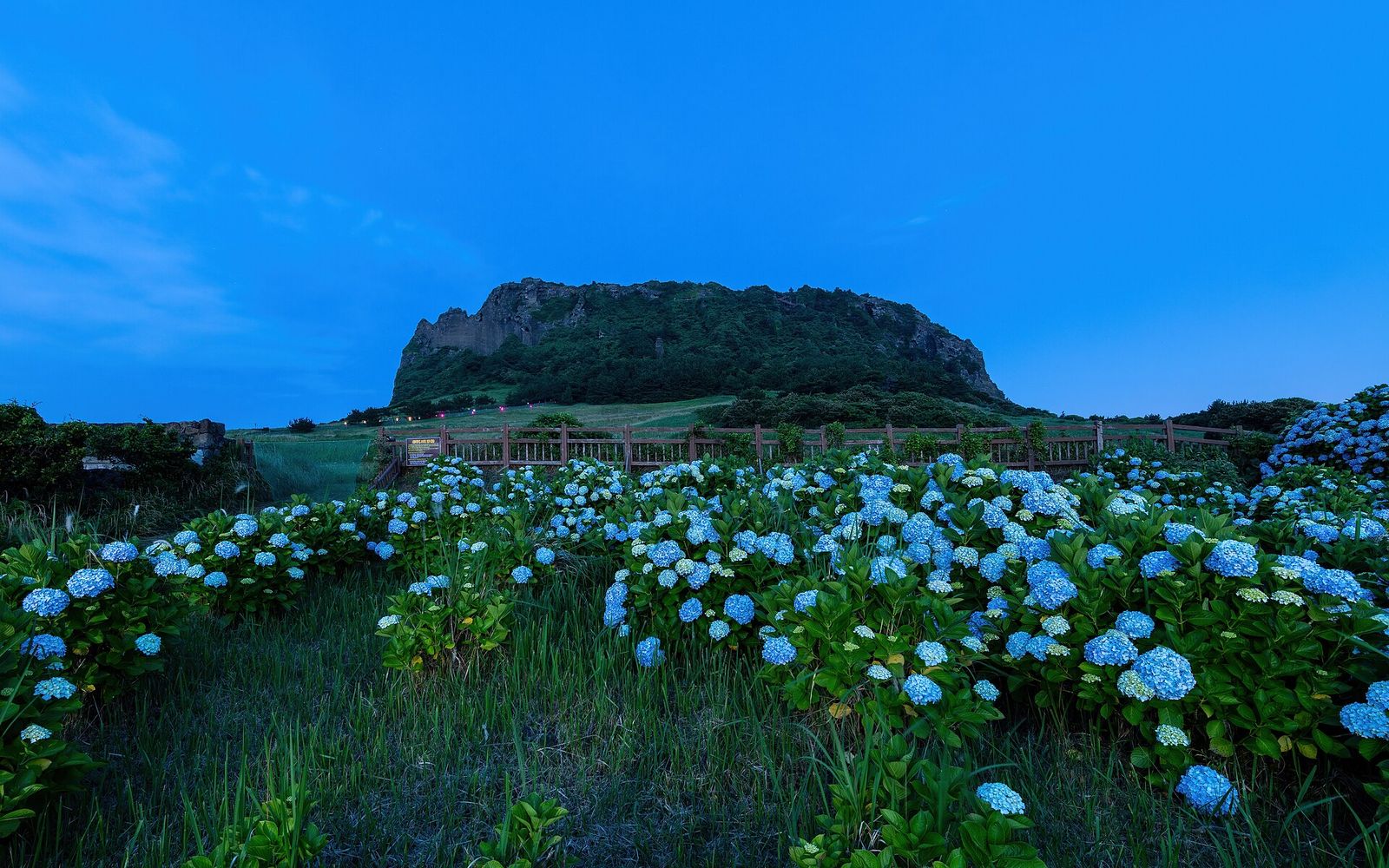
Jeju is a volcanic island off South Korea's southern coast, and it is usually the first place in the country where spring shows up. Fields of yellow canola, known locally as yuchae, bloom from about March into April; coastal cherry and camellia trees follow. The island's Volcanic Island and Lava Tubes were inscribed on UNESCO's World Heritage List in 2007, covering Hallasan, the volcano at the island's centre, the Seongsan Ilchulbong tuff cone on the eastern coast and the Geomunoreum lava tube system.
The island is compact, and one good way to see it is to pick two bases. Jeju City in the north has the airport, markets and museums; the south around Seogwipo has waterfalls, coastal walks and the quieter side of the island. The island's walking trails, the Jeju Olle routes, follow the coast and lead through villages, farmland and volcanic landscapes, and are a slower way to see it. In March, weather can be changeable, with wind and rain; bring layers and waterproofs.
Mainland South Korea's best-known cherry blossom event, the Jinhae Gunhangje Festival in the south-east, has been held in early April, traditionally from 1 to 10 April; confirm the current dates with the organisers, as blossom timing shifts from year to year. Jeju's blossoms come earlier, usually in late March.
Jeju is also the home of the haenyeo, women divers who harvest seafood without breathing equipment, a tradition inscribed on UNESCO's Intangible Cultural Heritage list in 2016. The Haenyeo Museum on the island explains their work, and you will sometimes see divers at work off the coast. Treat them as workers and not as an attraction: ask before taking photographs, keep your distance and buy seafood from them only when invited. Our People & Places pages look at their story.
Entry rules depend on your passport. Many nationalities are visa-exempt for short stays; others, including citizens of several countries, need a visa. Check South Korea's official visa portal before booking.
Prices, dates, permits and rules change — approximate, verify before you travel. Researched from public sources; field verification pending.
Planning a journey like this?
Tell us the season and your pace — we'll shape it into a private itinerary.
Talk to a travel designer