
The bridge that is rewoven every June
Four Quechua communities in the Peruvian Andes renew a grass-rope bridge by hand every year, as they have for centuries.
Spanning the Apurimac River in Peru's Cusco region, the Q'eswachaka bridge is about 92 feet long and under 4 feet wide, and is woven from grass. Peru's official tourism agency writes that it is considered the only surviving Inca suspension bridge, preserved close to its original form for more than 500 years. UNESCO listed the knowledge and rituals of its yearly renewal on the Representative List of the Intangible Cultural Heritage of Humanity in 2013.
The bridge belongs to four Quechua communities: Huinchiri, Chaupibanda, Choccayhua and Ccollana Quehue, in Canas province. Every year, in the second week of June, they take it down and replace it, with preparations beginning in late May. The renewal is a three-day event.
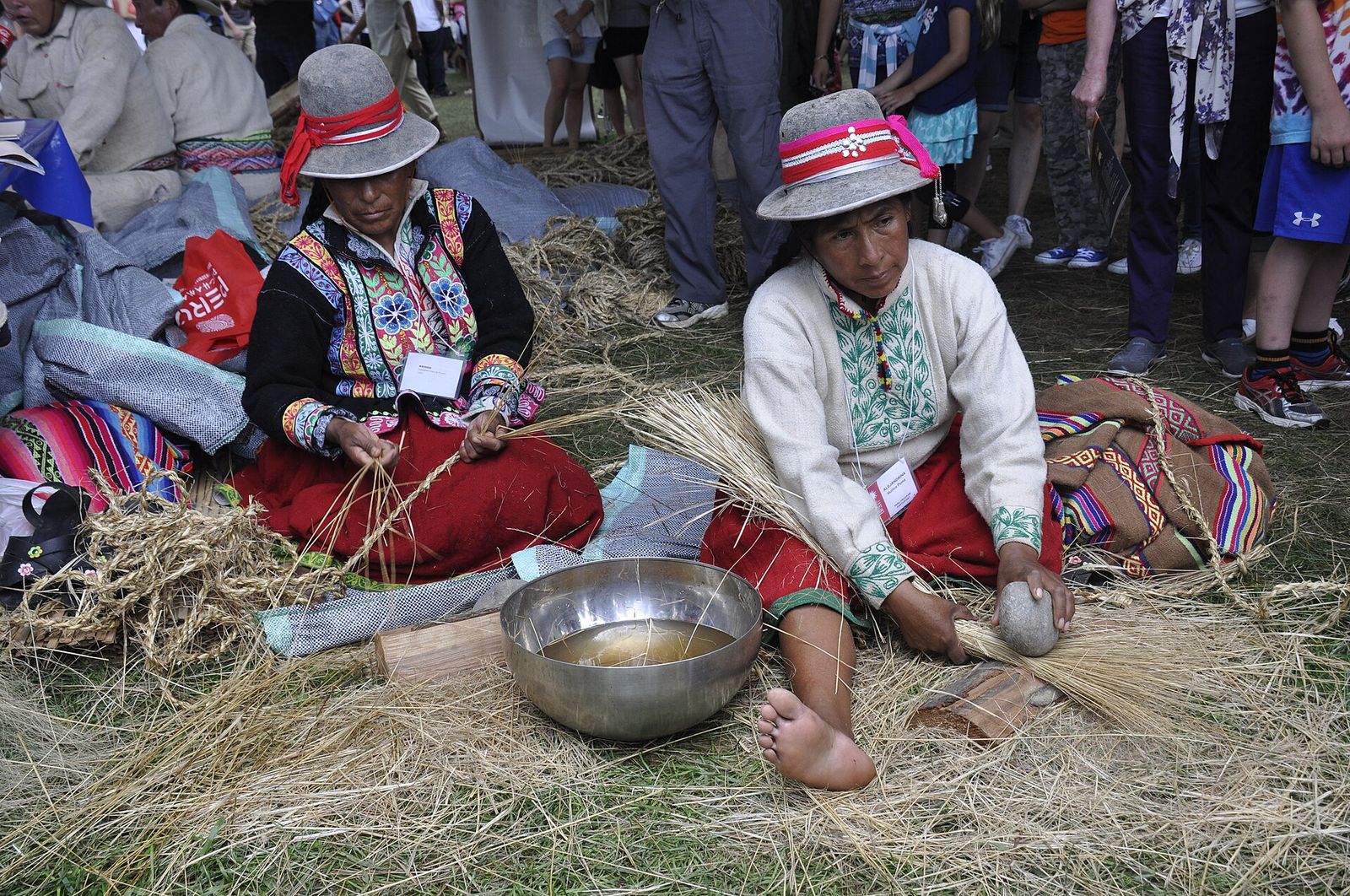
The work is shared out. According to Peru's tourism agency, women and children braid the ropes from q'oya ichu, a tough highland grass gathered above about 13,000 feet. Men carry out the construction, tying six main cables to old stone anchors on either side of the gorge, and two master builders and two weaving masters oversee the work from opposite ends. The ritual begins with an offering to the mountain spirit, Apu Quinsallallawi, and ends with a celebration. Local people say that skipping the renewal would bring poor weather for their crops.
The bridge is also a symbol of how communities keep their own heritage alive. The bridge is part of the Qhapaq Nan road network, which was added to the World Heritage List in 2014. Local reports from 2025 mention an attack that cut the bridge and a renewal that went ahead afterwards, with the Ministry of Culture announcing the work; we have not been able to read the primary reports and mention this only as context.
If you plan to visit, check dates with Peru's tourism authorities, because the schedule depends on the community. The renewal is not a staged show, and visitors are guests at a communal work day. Buy local crafts, listen before you photograph, and follow the instructions of the community members.
Prices, dates, permits and rules change — approximate, verify before you travel. Researched from public sources; field verification pending.
Planning a journey like this?
Tell us the season and your pace — we'll shape it into a private itinerary.
Talk to a travel designer