
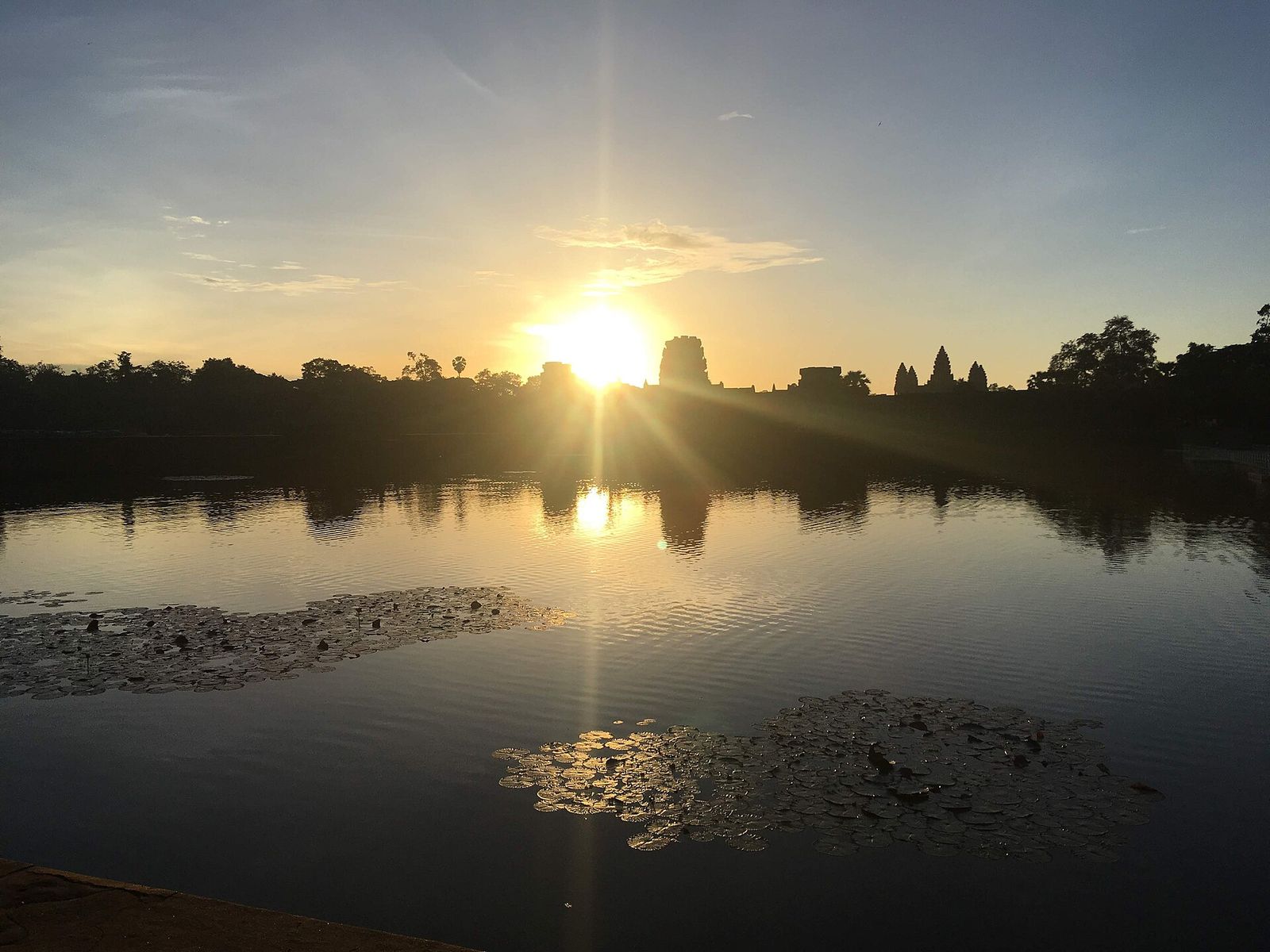
Angkor, slowly: the Khmer capital beyond the sunrise queue
Angkor Wat is the postcard. The city around it, built over six centuries, is the story.
Angkor is not one temple but a landscape of them, spread over a large area north of Siem Reap in Cambodia. The Khmer Empire, which built it, flourished from about the ninth to the fifteenth centuries. The Angkorian period is usually dated from 802 CE, when Jayavarman II began his reign, and the city was sacked by the kingdom of Ayutthaya around 1431, though sources differ on the end, and some give earlier dates for the start of Ayutthayan influence.
Angkor Wat itself was built between 1113 and 1150 by King Suryavarman II as a temple and personal mausoleum, in the early twelfth century. A little later, Jayavarman VII, whose reign began in 1181, built the walled city of Angkor Thom over the ruins of an earlier capital, Yasodharapura, with the Bayon at its centre. He also built Ta Prohm and Preah Khan and dedicated them to his parents. These dates are scholars' estimates, drawn from inscriptions and architecture, and are worth holding lightly.
The area was inscribed on the UNESCO World Heritage list in 1992, and was on the List of World Heritage in Danger until 2004. Cambodia manages it through the APSARA Authority, created in 1995; since 1993, international conservation work has been coordinated with India, Germany, Japan and UNESCO among others. Estimates put visitors at around two million a year by 2014, so crowds are the main challenge.
A slower way to see Angkor starts with the calendar and the clock. September falls in the rainy season, when the site is greener and quieter, though showers can be heavy; carry a rain layer and expect some muddy paths. The sunrise at Angkor Wat draws the biggest crowds; instead, try the first hour after opening at a lesser temple such as Preah Khan or Banteay Kdei, and visit Angkor Wat itself in the afternoon.
Plan at least three days, with long breaks. Tickets are sold through the official Angkor Enterprise website and app, which also sells boat trips on Chong Kneas; we could not confirm current prices, so check the site. Dress rules apply at active temples, with shoulders and knees covered; carry a light scarf.
Beyond the temples, Siem Reap has a number of social enterprises that train young Cambodians in crafts and the arts; one is profiled in this issue's People pages. Choose guides licensed by the authority, and be wary of anyone who offers to take you through restricted areas.
Entry: Cambodia issues an electronic visa through its government portal; fees and rules depend on your nationality, so check the official site. Land borders with neighbouring countries can close at short notice, so confirm the status of any overland crossing before you rely on it.
Prices, dates, permits and rules change — approximate, verify before you travel. Researched from public sources; field verification pending.
Planning a journey like this?
Tell us the season and your pace — we'll shape it into a private itinerary.
Talk to a travel designer