
Samarkand and Bukhara: the Silk Road cities
Two UNESCO-listed cities on the old trade routes of Central Asia, and a visa change for Indian travellers.
The cities of Uzbekistan grew rich as stops on the trade routes that linked China, India, Persia and the Mediterranean. Samarkand and Bukhara are the best-known. Both are on the UNESCO World Heritage list: Bukhara's historic centre since 1993, with about 140 architectural monuments, and Samarkand since 2001 as Crossroads of Cultures.
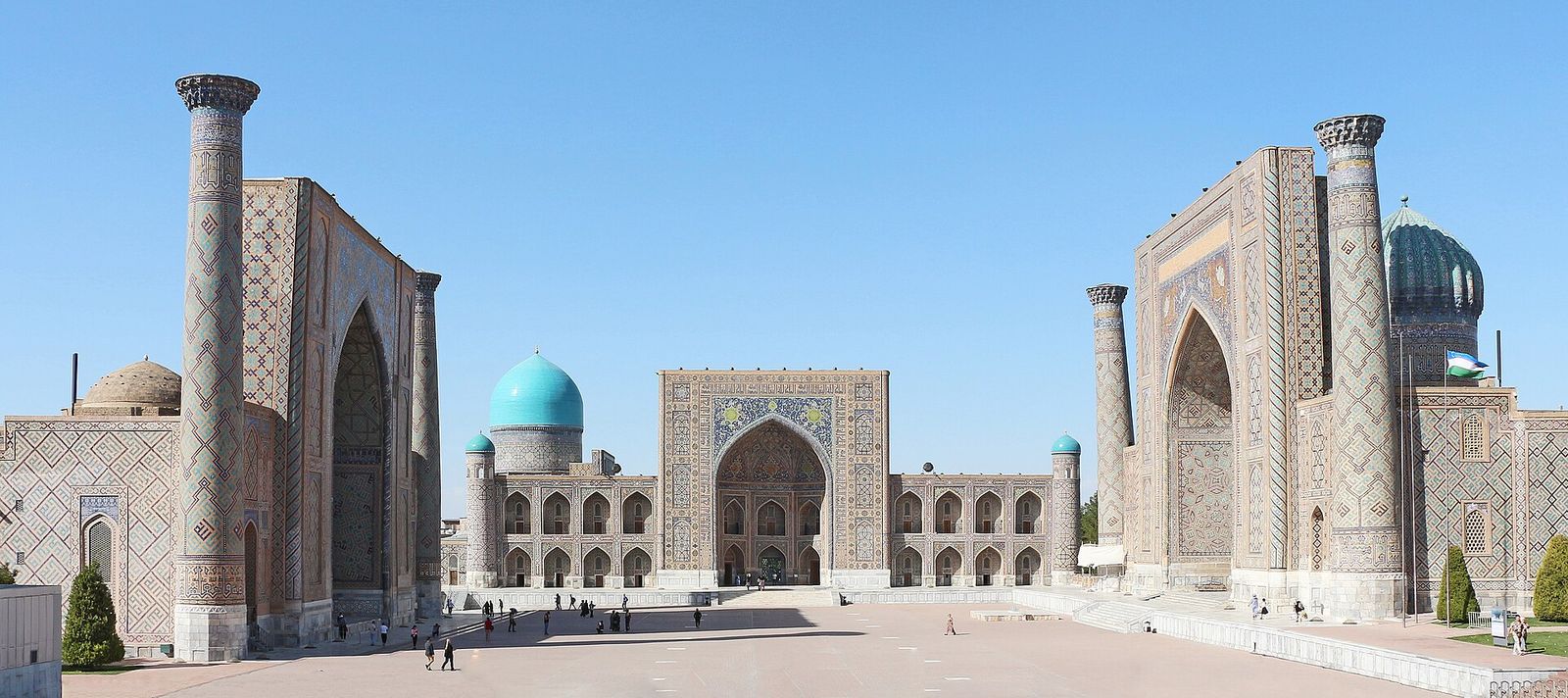
Samarkand became the capital of Timur's empire in 1370, and he rebuilt much of the city over the next 35 years. The Registan, its most famous square, was begun when Ulugh Beg built the first madrasa of the ensemble between 1417 and 1420; the other two madrasas date from the seventeenth century according to one account that needs a citation, so we do not give exact dates. The Shah-i-Zinda memorial complex was founded by Qarakhanid rulers in the eleventh century, with buildings from the eleventh to the fifteenth centuries. The ruins of the older city, Afrasiab, were destroyed by Genghis Khan.
Bukhara was a prosperous Silk Road city that became the Samanid capital by 850 and was destroyed by Genghis Khan in 1220. Its main landmarks include the Ark fortress, the Kalyan Minaret and Po-i-Kalyan complex, the Mir-i-Arab Madrasah, the Lyab-i Hauz ensemble and the Ismail Samani Mausoleum. Samarkand is about 215 km east of Bukhara, and the country's cities are linked by an international airport network and rail.
A short word on the table. Plov, called osh or palov in Uzbek, is the national dish of Uzbekistan: rice simmered in a rich meat-and-vegetable base called zirvak, usually in a large cauldron over a fire. Samarkand-style versions use a particular blend of seed oils, and a master cook can prepare it for up to a thousand people from one pot. UNESCO recognised the dish's cultural traditions in 2016.
Entry rules are changing. We could not verify this against an official Uzbek source, so confirm the rule with the Uzbek embassy or the government's visa site before you book. Entry rules for Indian passport holders can change at short notice: check the official Uzbek e-visa portal and with your airline before you book.
How to go well: dress modestly at religious sites, ask before photographing people, and buy crafts from workshops where you can see them made.
Prices, dates, permits and rules change — approximate, verify before you travel. Researched from public sources; field verification pending.
Planning a journey like this?
Tell us the season and your pace — we'll shape it into a private itinerary.
Talk to a travel designer