
Keeping the bridges alive: Morningstar Khongthaw and the root-bridge builders
In the Khasi Hills, a village committee is mapping, adopting and repairing living bridges, and asking for them to be protected on its own terms.
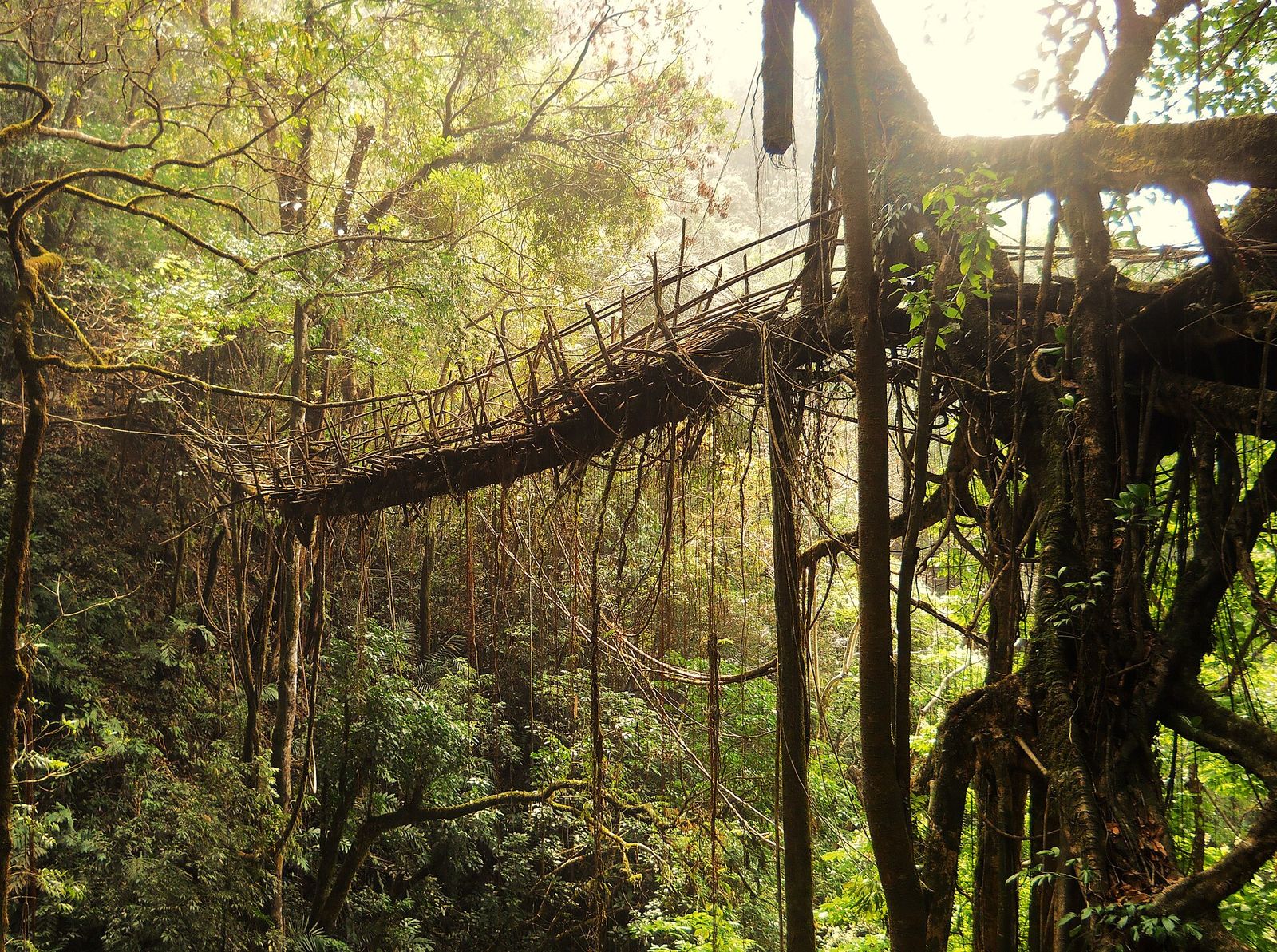
The living root bridges of Meghalaya are grown, not built, and they need years of upkeep. A feature by Barasha Das in Mongabay India, published on 1 November 2024, describes how builders guide the aerial roots of the rubber fig across a stream, using hollowed areca trunks and bamboo for support, and add more roots later for steps and railings. A structure can take decades to carry weight, and the bamboo has to be replaced as it decays.
Morningstar Khongthaw, chair of the Khyrim Syiemship Heritage Committee, is one of the people the article follows. The committee has set up a knowledge centre with support from the United Nations Development Programme, has mapped more than 132 bridges and has adopted 30 of them across three villages: Rangthylliang, Mawkyrnot and Mynrieng. Young people apprentice with elder practitioners each monsoon, and the work is being documented. Montila Khongbeh, from Mawkyrnot, is quoted on the role women play in building and maintaining the bridges and in guiding younger women.
The article does not present this as a simple success story. Tourism is the main pressure it describes. Popular bridges have been reinforced with concrete or steel and their paths paved, some villages are moving from farming to tourism income, and many less-visited bridges are being neglected. The committee has proposed a protected forest of 50 metres around each bridge, and local stakeholders criticise a top-down approach in official protection guidelines that gives too little weight to the people who do the work.
For a visitor, the guidance is plain. Walk with a local guide from the village, stay on the path, never climb or hang from the roots, and pay the fees that go to the community.
Prices, dates, permits and rules change — approximate, verify before you travel. Researched from public sources; field verification pending.
Planning a journey like this?
Tell us the season and your pace — we'll shape it into a private itinerary.
Talk to a travel designer