
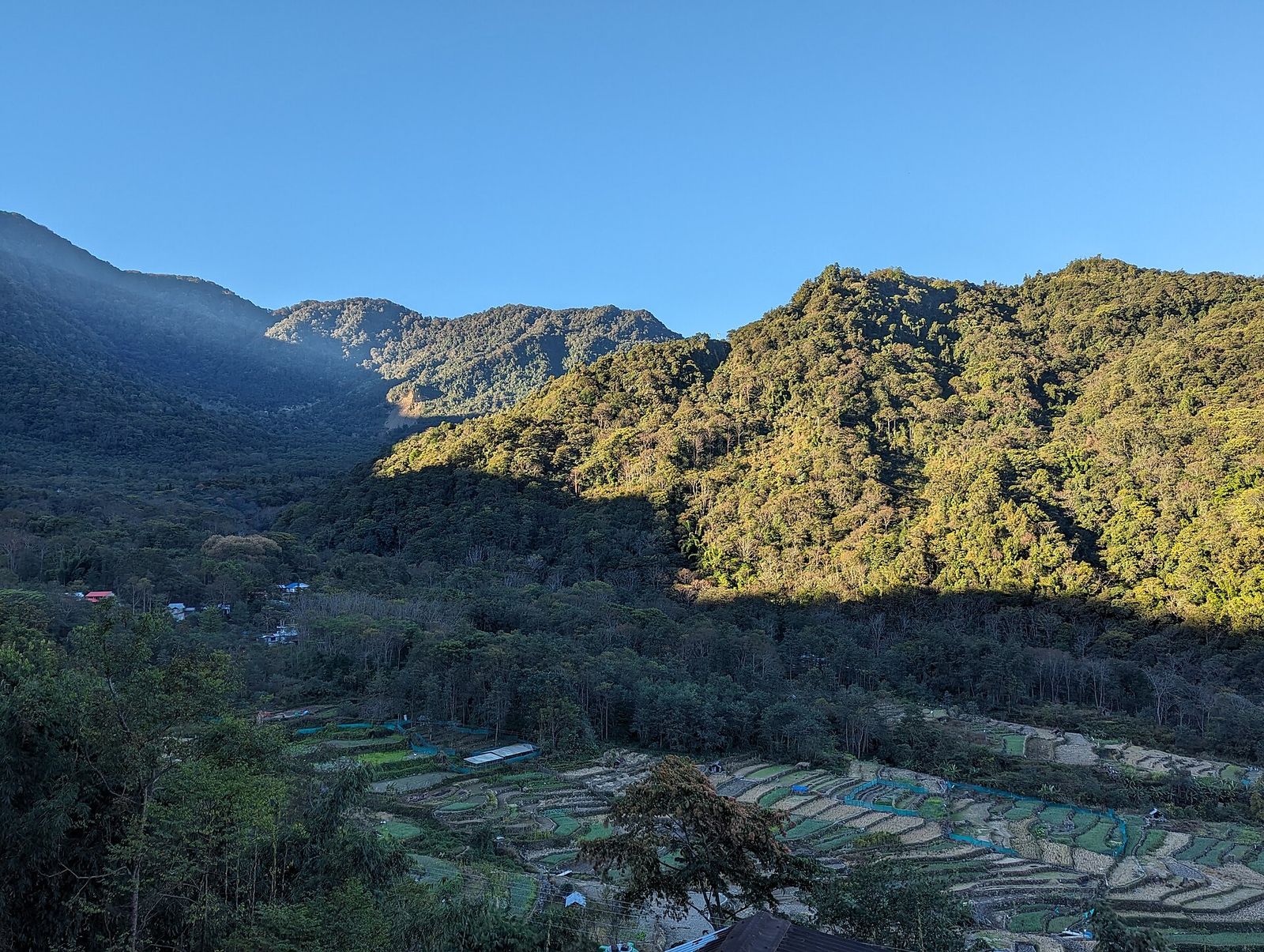
The village that stopped hunting
In Khonoma, a Naga village above Kohima, a bloody week in 1993 became the start of India's best-known community conservation story.
Khonoma sits at around 5,300 feet, an Angami village that residents describe as roughly 700 years old. Hunting was part of life here, and in 1993 it went badly wrong: during a Christmas hunting competition, about 300 Blyth's tragopans, an endangered pheasant, were killed in a single week.
For some villagers, that number was a turning point. Reporting first published by Reasons to be Cheerful records villager Vilazosie Punyu on the realisation that “We realized that disaster lay ahead.” By 1998 the community had created the Khonoma Nature Conservation and Tragopan Sanctuary, covering about 20 square kilometres, a sixth of village land, and described as India's first community-led conservation project. Hunting and logging were banned across the village in the years that followed; sources differ on the exact year of the formal ban, so we say only that it came between 1998 and 2001.
The change was not free. A Gerald Durrell Memorial Fund grant paid village men as forest wardens for three years. Khonoma opened its first homestay in 2006 and now has about a dozen. In 2022 it received around 2,500 visitors, whose registration fee helps pay for forest patrols and village development. About 25 members of the Khonoma Youth Association patrol the forest, and three-day hunting permits are still allowed for people dealing with crop-raiding animals — a trade-off the village is open about.
For a traveller, the lesson is practical. Stay in a homestay, take a local guide, pay the registration fee and remember that the paddy terraces you photograph are someone's livelihood. A tourism committee member quoted in the reporting puts it simply: tourism is community.
Prices, dates, permits and rules change — approximate, verify before you travel. Researched from public sources; field verification pending.
Planning a journey like this?
Tell us the season and your pace — we'll shape it into a private itinerary.
Talk to a travel designer