
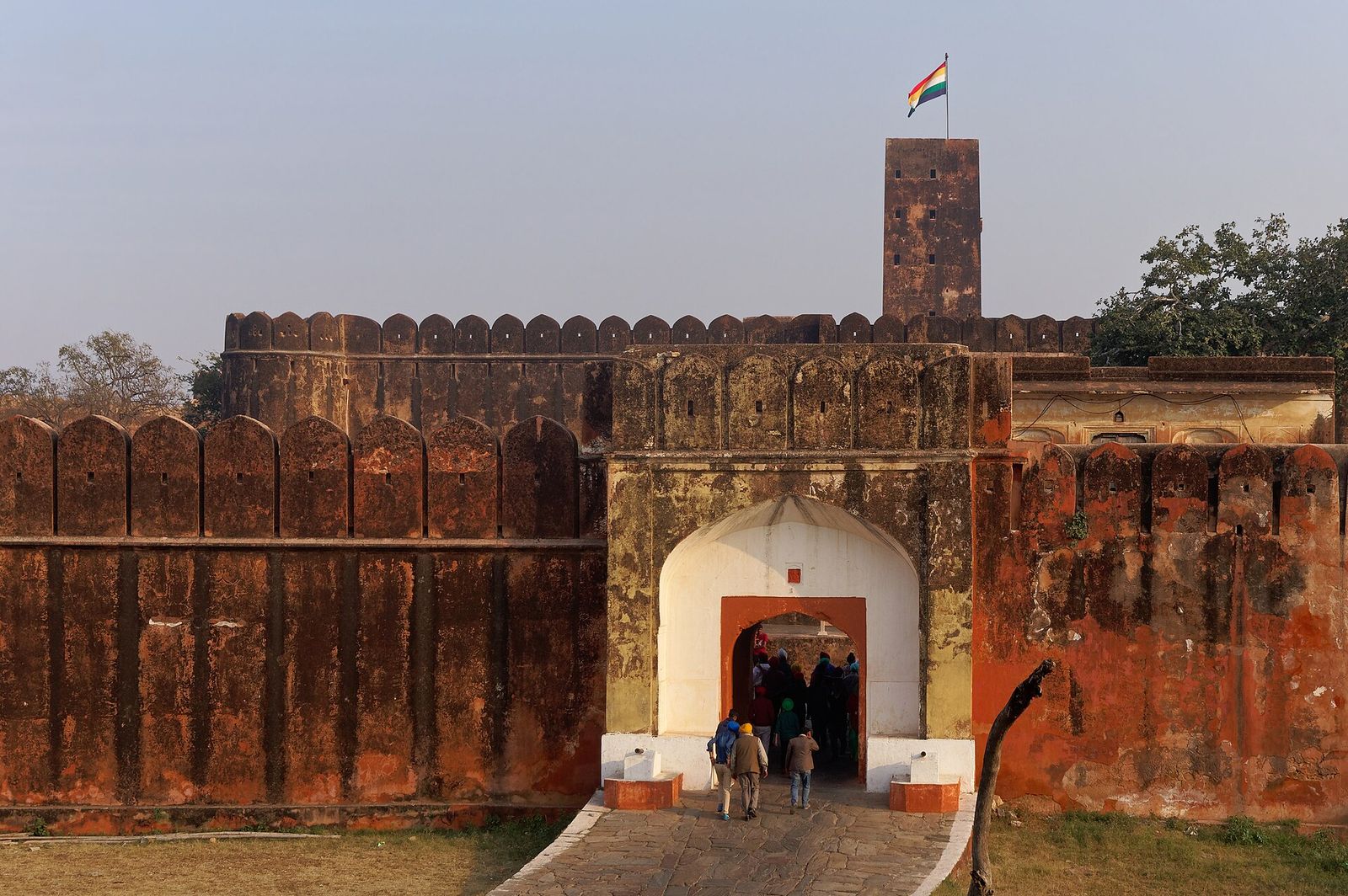
Rajasthan in winter: a slower route through forts, cities and books
Cold mornings, warm stone and a literary festival: why January suits Rajasthan, and how to avoid turning it into a sprint.
Most visitors treat Rajasthan as a checklist: Jaipur, Jodhpur, Jaisalmer, Udaipur, in as few days as a car and driver allow. In January the state offers a better idea. Days are bright and mild, nights are properly cold, and the stone of the old cities is at its most agreeable in low light. The sensible plan is to choose fewer places and give each of them real time.
A good anchor is Jaipur. The old walled city was inscribed on UNESCO's World Heritage List in 2019, and the Jantar Mantar observatory, an eighteenth-century collection of astronomical instruments built in stone, has been listed since 2010. Amer Fort, above the city, is one of six forts that together form the serial World Heritage property Hill Forts of Rajasthan, inscribed in June 2013. The other five are Chittorgarh, Kumbhalgarh, Ranthambore, Gagron and Jaisalmer. You do not need to see all six. Seeing two properly, with a guide who knows the history and time to sit on a rampart, is worth more than a fast tour of every one.
January is also Jaipur's literary season. The 19th Jaipur Literature Festival is scheduled for 15 to 19 January 2026 at Hotel Clarks Amer, according to the festival's announcements and press coverage; confirm the venue and the entry and registration process on the organiser's site, because it has changed in the past. The festival is crowded and hotels in the city fill early, so if books are your reason to travel, book your stay first and your sessions second. If crowds are not your reason, plan Jaipur for the days before or after.
From Jaipur, one rewarding second stop is Ranthambore, whose fort and tiger reserve lie a few hours to the south-east. The fort sits inside the reserve, and the wildlife is the draw for most visitors; safari zones and seats are allotted through an official online system, and mornings in winter are cold enough that an open vehicle needs a real jacket and a scarf. Another is Chittorgarh and Kumbhalgarh, then Udaipur, for a route that moves from hill fort to lake city. Whichever you choose, allow for road times that are longer than the distance on the map suggests.
A few habits make the trip better. Eat where the cooks are local, and ask what is in season. Buy textiles and blue pottery from makers or cooperatives rather than from the first shop outside a monument. Dress in layers, because a 4 am start for a tiger safari and a 2 pm walk through a sunlit courtyard are two different climates. And leave a free day in the middle: the forts reward a second visit more than a third monument ever does.
Think, too, about who benefits. Rajasthan's craft traditions, from block printing to blue pottery and miniature painting, depend on buyers who value the work. A workshop visit where you see a printer at the table, hear how a block is carved and pay a fair price does more for a craft than any number of photographs, and it gives a trip a human shape that a monument alone cannot. Ask guides and hosts which cooperatives and family workshops they trust, and be wary of anyone who steers you only to shops that pay commission.
Practical note: foreign visitors usually pay higher monument entry fees than Indian citizens, and fees and timings change. Confirm on the Archaeological Survey of India or Rajasthan Tourism pages before you go.
Prices, dates, permits and rules change — approximate, verify before you travel. Researched from public sources; field verification pending.
Planning a journey like this?
Tell us the season and your pace — we'll shape it into a private itinerary.
Talk to a travel designer