
Sikkim in March: monasteries and the first rhododendrons
A small Himalayan state with big views, old gompas and a flower season that starts low and climbs.
Sikkim, tucked between Nepal, Bhutan and Tibet, is small and steep. Almost everything of interest sits on a mountain road, and the journeys between sights are part of the experience. March is a quiet, cool month when the first rhododendrons begin to open at lower altitudes and the hills are clear in the mornings.
A good base is Gangtok. Rumtek Monastery, about 24 km from the capital at roughly 1,500 metres, is a large Tibetan Buddhist monastery rebuilt by the 16th Karmapa after he arrived from Tibet in 1959 and opened in 1966. It remains a place where the monastic succession is contested, and security is visible; follow instructions and keep to the visitor areas. In the west of the state, Pemayangtse Monastery, near Pelling at about 2,085 metres, belongs to the Nyingma order and was founded in the seventeenth century, with the main complex dating to the early eighteenth. On a clear day, it looks toward Kangchenjunga, the world's third-highest mountain.
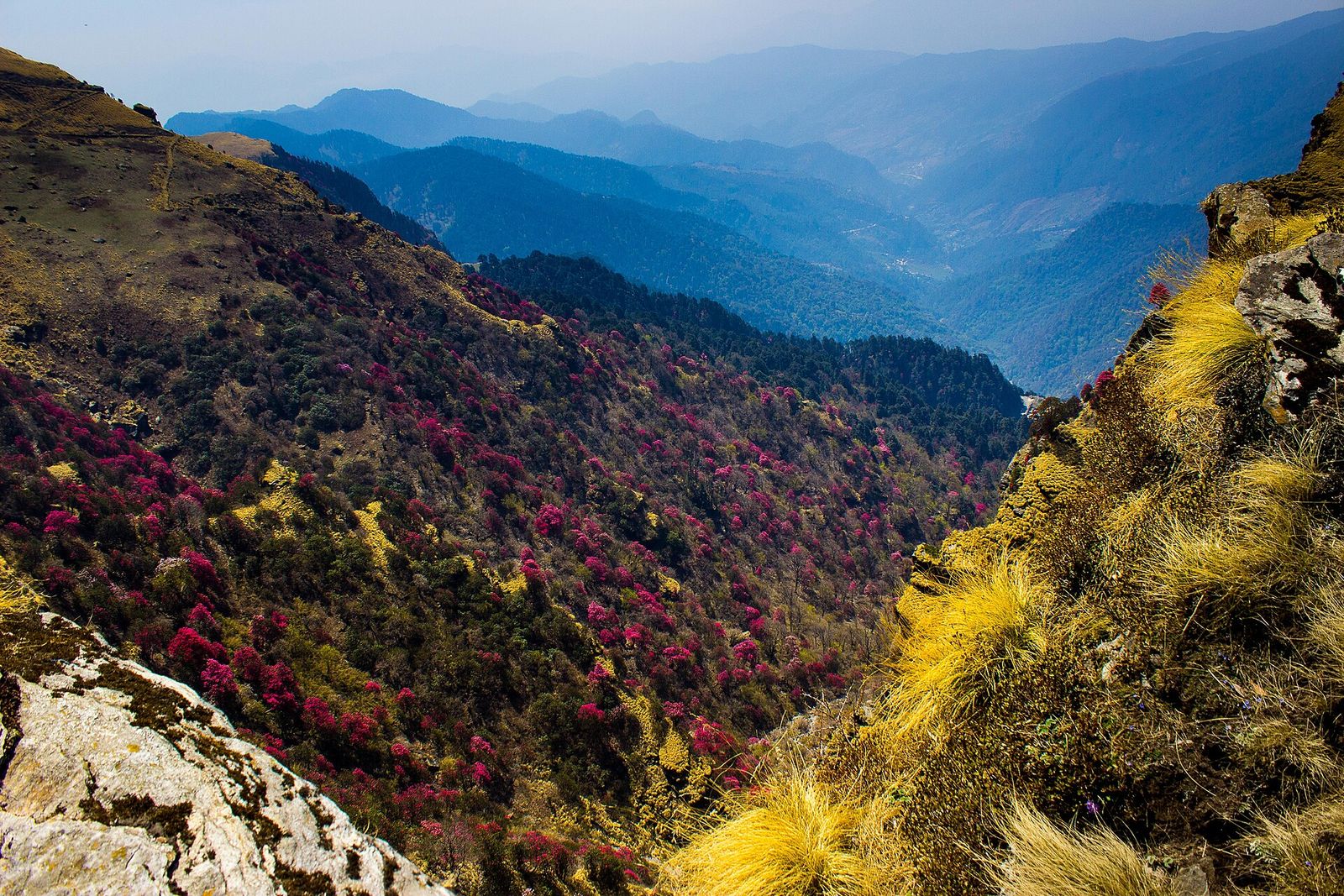
Sikkim's rhododendrons are famous. The Shingba Rhododendron Sanctuary in the Yumthang Valley in North Sikkim, around 3,500 metres, has more than two dozen species, and flowers across spring into early summer. Peak bloom at that height is usually April to May, and in March the road and valley can still be snowbound, so check access with a registered operator or the state tourism department before planning a trip. Lachung is the nearest village with places to stay; Yumthang is not a day trip from Gangtok.
Khangchendzonga National Park, which covers a large part of the state, has been a UNESCO World Heritage Site since 2016. Treks into it need permits and a registered operator.
Permits matter in Sikkim. Gangtok and the main monasteries do not need special permissions, but areas near the border, including Tsomgo (Changu) Lake, Nathu La and parts of North Sikkim, need permits that are normally arranged through a registered travel operator. Foreign nationals need a Protected Area Permit for restricted areas. Rules change, so confirm with the Sikkim tourism department and your operator.
Travel in Sikkim is by road, and landslides can close routes in wet weather. Allow buffer days, and carry warm layers and motion-sickness tablets if you need them. Stay in homestays, eat the local food such as momos and thukpa, and buy from local crafts shops.
Prices, dates, permits and rules change — approximate, verify before you travel. Researched from public sources; field verification pending.
Planning a journey like this?
Tell us the season and your pace — we'll shape it into a private itinerary.
Talk to a travel designer