
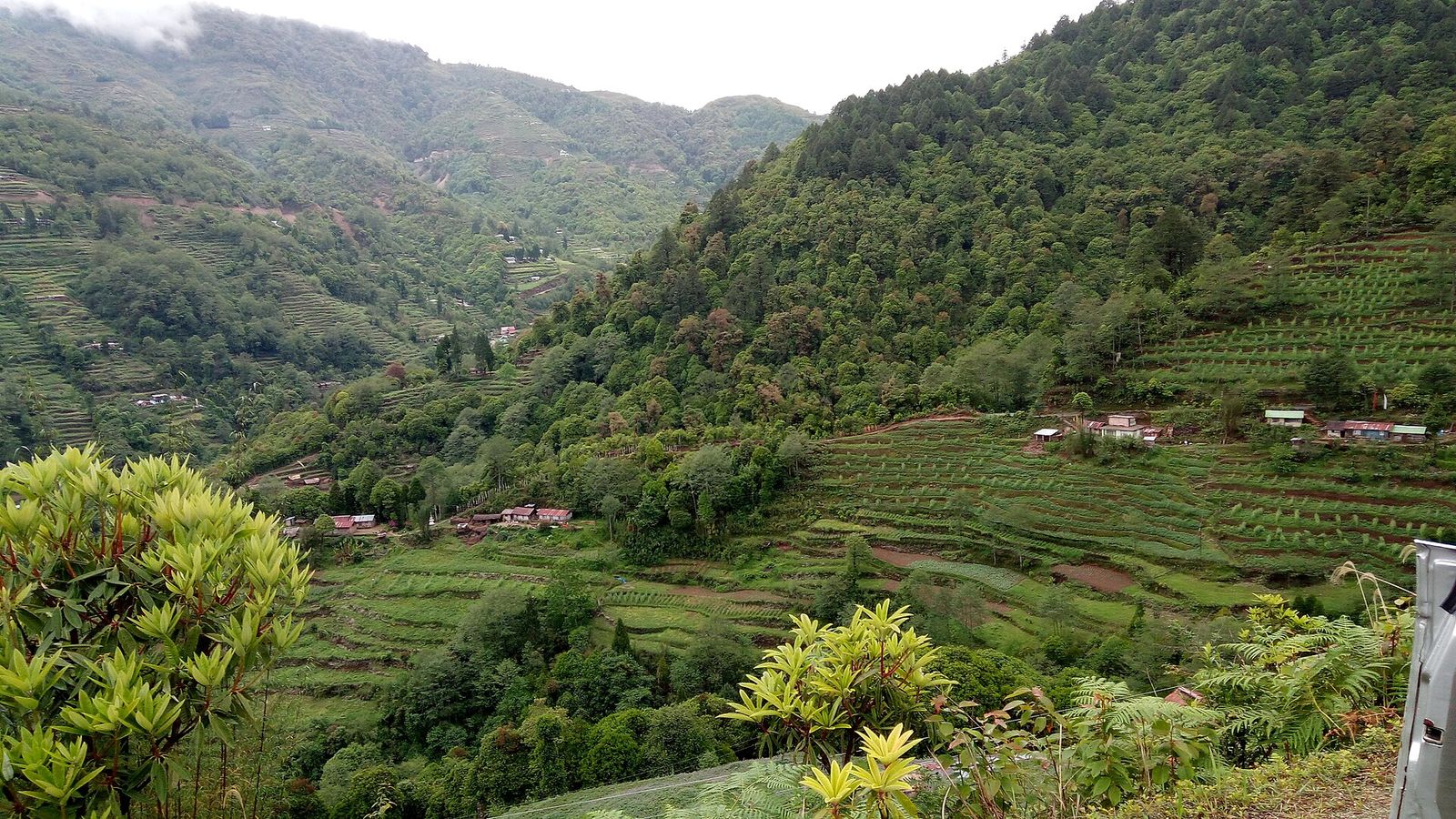
The hills that went organic
Sikkim set out in 2003 to convert all its farming to organic methods, and became India's first fully organic state.
Sikkim's terraced farms, in steep valleys at heights from near sea level to several thousand metres, grow cardamom, ginger, maize, mandarin oranges and vegetables. In 2003 the state government decided to convert all of its farming to organic methods, a policy that was carried out in stages over more than a decade. Sources give 2015 or 2016 for the year Sikkim was declared fully organic, making it India's first organic state.
The transition involved phasing out chemical fertilisers and pesticides, training farmers, promoting compost and organic inputs and certifying farmland. The state also promoted organic produce to visitors, and many hotels and restaurants now advertise local produce. The sources we consulted do not name individual farmers, and this profile is a place profile for that reason.
Independent writers have raised questions about yields, farmers' incomes and the practical details of enforcement, as well as about what the label means for imported food sold in the state. The discussion is open, and we recommend reading independent studies and local reporting alongside government statements.
For visitors, the practical lesson is to eat what the hills grow. Ask your homestay about the farm behind it, try seasonal vegetables and fruit, and buy cardamom or tea from local cooperatives and markets. Stay on paths when walking through terraces, and ask permission before entering fields.
Prices, dates, permits and rules change — approximate, verify before you travel. Researched from public sources; field verification pending.
Planning a journey like this?
Tell us the season and your pace — we'll shape it into a private itinerary.
Talk to a travel designer