
Rongali Bihu: Assam's new year, on the drums
Mid-April brings seven days of music, food and gifts across Assam. Here is what to look for, how to join in, and how to go with respect.
Rongali Bihu, also called Bohag Bihu, marks the start of the Assamese new year and the arrival of spring. In 2026 press reports expect the festival to begin on 14 April with Goru Bihu, the day when cattle are washed and honoured, and to reach the new year proper on 15 April, known as Manuh Bihu, the day for people. Some reports describe a seven-day cycle; in many places today the festivities concentrate into about three days. Local observance can follow sunrise and the Sankranti calendar, so dates may vary slightly from place to place, and a state holiday on 15 April is widely listed.
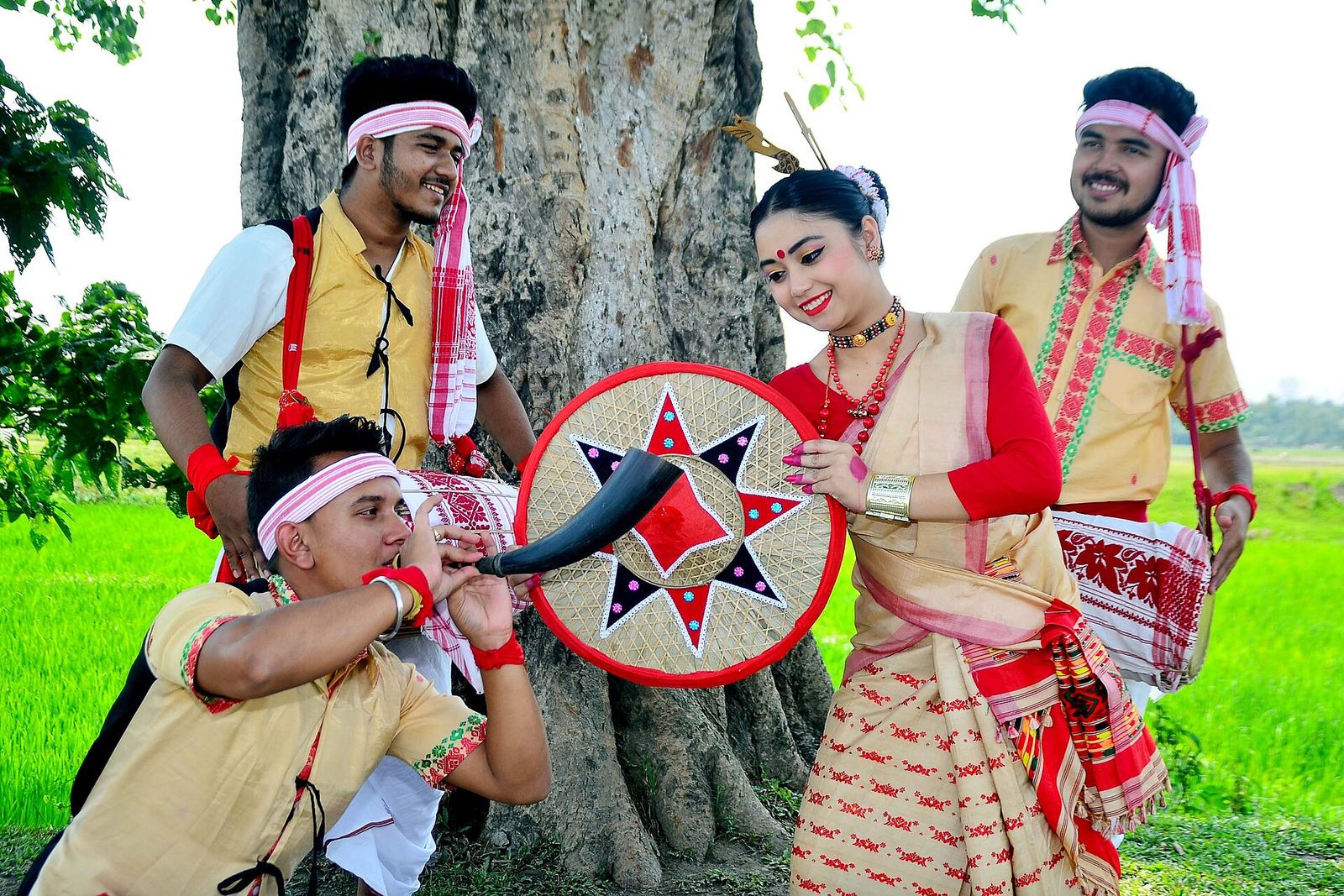
What you hear before you see is the dhol. The Assamese dhol is a barrel-shaped, double-headed drum, and the Government of India granted it a Geographical Indication (GI) tag on 30 March 2024. It is played with a pepa, a hornpipe made of buffalo horn, along with the gogona, a bamboo mouth-instrument, and the toka, a clapper made of bamboo. Together they carry the Bihu dance, which is fast, rhythmic and often performed in groups.
The dress is as much a part of the festival as the music. Many dancers wear the traditional muga or pat silk, and the gamosa, a woven cloth with a red border that is a symbol of Assamese hospitality, is given to guests and elders as a mark of respect. Husori groups go from house to house to sing and receive blessings, and gifts of new clothes are exchanged within families.
Food is the third language of Bihu. Expect pitha, the rice cakes of Assam, and laru, the sweets made from coconut or sesame, to appear on every table. A separate page in this issue explains what to ask about and how to be a good guest at an Assamese table. Rongali Bihu is one of three Bihus: Kati Bihu in autumn and Magh Bihu in January mark other points of the farming year, but Rongali, from rang, meaning joy or colour, is the one that welcomes spring and sets the tone for the months ahead. Its timing follows the traditional Assamese solar calendar, which is why it falls in mid-April every year, close to other new-year festivals across India and Southeast Asia.
How to go well: public Bihu programmes in Guwahati and in Upper Assam towns such as Sivasagar and Dibrugarh are open to visitors, but the warmest invitations are domestic. If you are invited into a home, accept the gamosa, remove your shoes, and ask before photographing people at prayer or at the family table. Book trains and flights early, because Assamese families travel home in large numbers around the festival, and expect some shops to close on the main days.
The festival also depends on craftspeople who are under pressure. See the profile of a dhol-maker in this issue's People & Places, and buy instruments and textiles from makers or cooperatives when you can.
Prices, dates, permits and rules change — approximate, verify before you travel. Researched from public sources; field verification pending.
Planning a journey like this?
Tell us the season and your pace — we'll shape it into a private itinerary.
Talk to a travel designer