
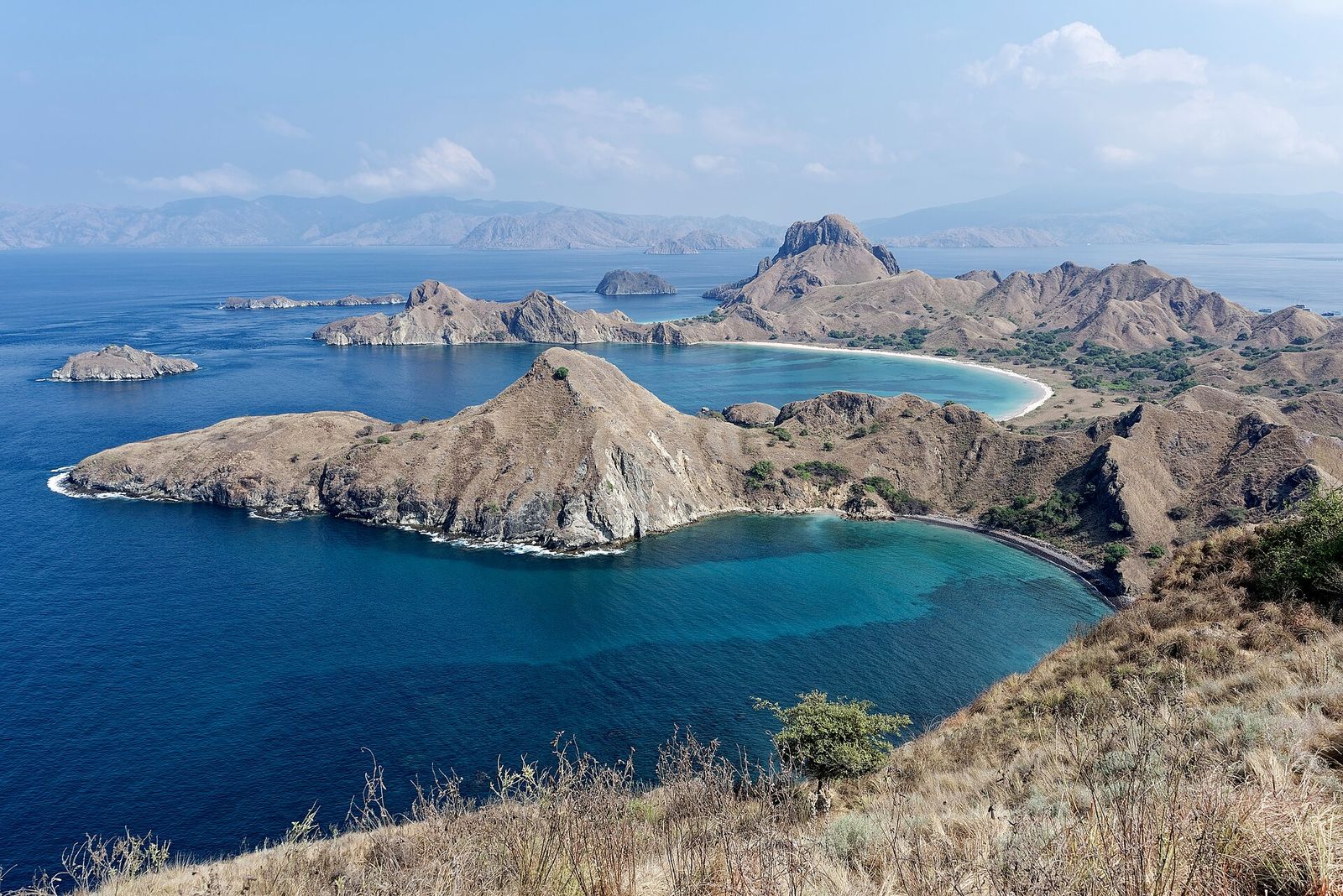
Komodo and Flores, under a new visitor cap
Indonesia has capped visits to the dragons' islands. What that means if you were planning to go.
Komodo National Park was established in 1980 and inscribed as a UNESCO World Heritage Site in 1991. It covers about 1,733 square kilometres, of which about 603 are land, and it includes three large islands, Komodo, Padar and Rinca, plus 26 smaller ones. The wild population of Komodo dragons is concentrated on Komodo and Rinca, with smaller numbers elsewhere; counts on one reference site give roughly 1,700 on Komodo and 1,300 on Rinca, but they are undated, so treat them as indicative.
In April 2026, Indonesia's Ministry of Forestry introduced a visitor limit. According to Indonesian public broadcaster RRI, the quota took effect on 1 April 2026 and allows 1,000 visitors per day, roughly 365,000 a year, across Padar, Rinca and Komodo islands and 23 diving sites in the surrounding area. Forestry minister Raja Juli Antoni cited research warning that long-term over-tourism would damage the area, and the policy was developed in discussion with stakeholders in the gateway town of Labuan Bajo since May 2025. Lawmakers have asked for more attention to the communities who depend on the trade.
In practice, that means booking early, and being sceptical of any operator who promises last-minute availability in peak weeks. Fee figures vary widely across commercial sites, from a few hundred thousand to more than IDR 600,000, and we could not confirm a current official schedule. Confirm the fee and any required permits with the park authority, Balai Taman Nasional Komodo, or a licensed operator. Dry season runs roughly from May to October, which is also high season.
The park is not the only reason to come. Flores, the large island to the east, rewards time on land. Wae Rebo, a village high in the Manggarai mountains, is famous for its tall, conical, thatched houses, known as Mbaru Niang; its rebuilding won UNESCO recognition in 2012. It is reached on foot, a trek of roughly three to four hours from the village of Denge, and has no mobile signal. There is a profile of the village in this issue's People pages.
How to go well: use a ranger-led walk on land, keep the distance rangers tell you, never feed or approach dragons, and book with a local licensed operator. Be wary of anything promising “exclusive” or “private” access. If a quota is full, take it as the cue to explore Flores' villages, coffee farms and coast, rather than as a problem to be bought away.
Prices, dates, permits and rules change — approximate, verify before you travel. Researched from public sources; field verification pending.
Planning a journey like this?
Tell us the season and your pace — we'll shape it into a private itinerary.
Talk to a travel designer