
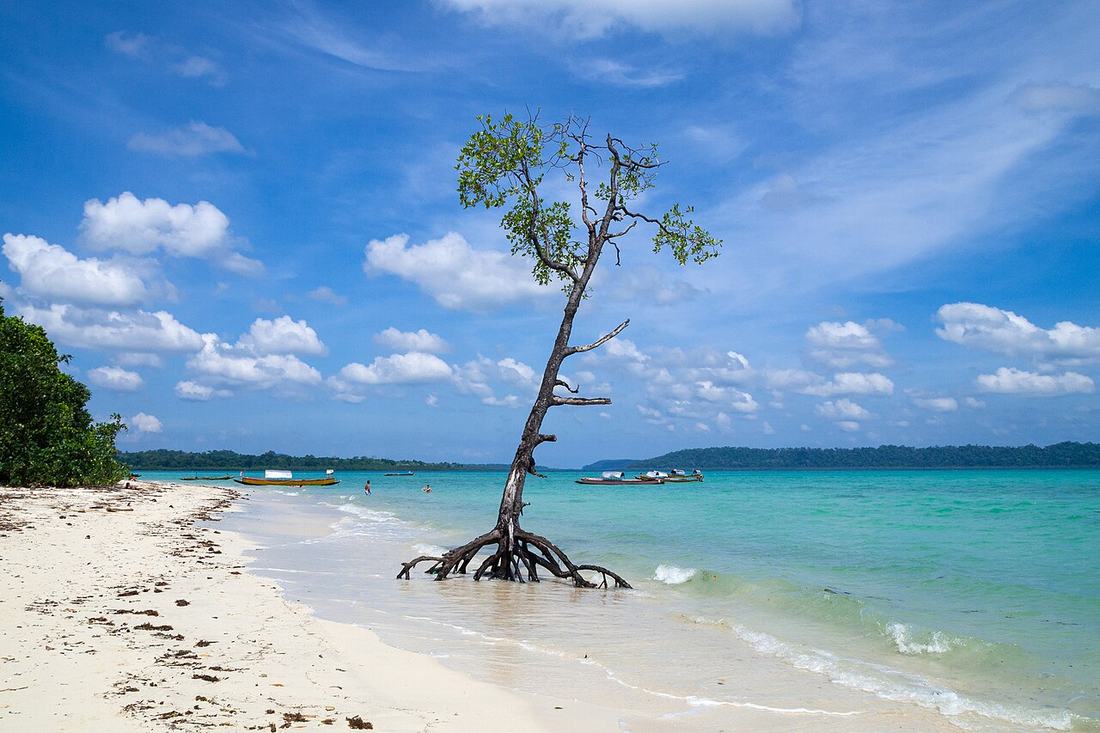
Swaraj Dweep and Shaheed Dweep: the Andamans, carefully
Two renamed islands, one patient network of dugong watchers, and what the rules actually say about permits.
Most visitors know Havelock and Neil. Official signage and tickets now use Swaraj Dweep and Shaheed Dweep. They sit within an archipelago of around 834 islands, which has more protected areas than any other part of India, and that fact shapes everything: where you may dive, how fast boats may go, and who is allowed to fish.
From the state capital, Sri Vijaya Puram, formerly Port Blair, ferries run to both islands. Neil Island takes about two hours by boat, according to a researcher's account in Nature inFocus; sources for Havelock give 1.5 to 2 hours. Both services run on timetables that change with the sea and the season, and government and private operators differ, so book directly with a licensed operator and confirm the day before.
Permits are the most misunderstood part of the trip. Indian citizens do not need a permit for the main tourist islands. For foreign visitors, the Andaman and Nicobar Administration's tourism department states in a 2026 notice that no Restricted Area Permit is required for the 29 islands excluded from the regime, and that 11 uninhabited islands are exempted for day visits only, with the exemption valid up to 31 December 2027. Citizens of Afghanistan, China (including Hong Kong and Macau) and Pakistan still require a permit, and separate approvals apply for reserved forests, sanctuaries and tribal reserves. Many travel websites still carry outdated rules; use the official notice.
The sea here is also a working landscape. Marine researcher Swapnali Gole, writing in Sanctuary Asia, describes how a small team built a dugong monitoring network that began with a handful of informants and now has more than 200 members: fishers, dive operators, forest staff, schoolchildren, marine police and the navy and coast guard. Dugongs graze on seagrass and nothing else, which ties their survival to a few meadows that boats and trawlers can easily damage. Her account of the early workshops is candid about what did not work: the first, in 2018, drew two fishers instead of the roughly 20 expected, and a later meeting drew nobody.
For visitors, the lessons are simple. Choose dive and snorkel operators that keep boats slow near seagrass beds and reefs, never touch or chase marine life, and buy fish from the local market rather than assuming a menu fish was caught nearby. The monsoon, which is in progress in July, brings rough seas and can disrupt ferries and diving; plan flexibly or choose the drier months for a first visit.
The islands also have a history that is not about beaches. The next pages visit it.
Prices, dates, permits and rules change — approximate, verify before you travel. Researched from public sources; field verification pending.
Planning a journey like this?
Tell us the season and your pace — we'll shape it into a private itinerary.
Talk to a travel designer