
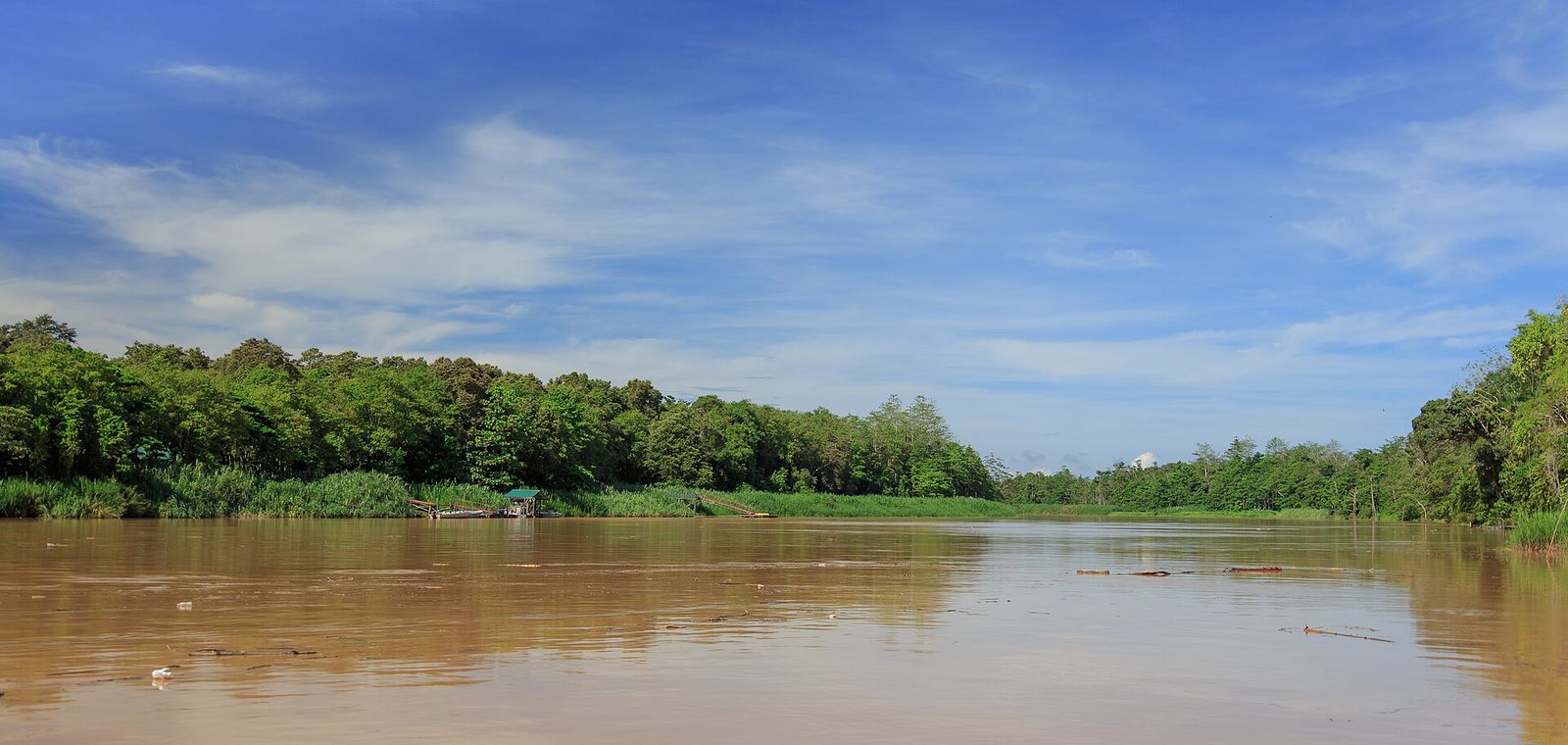
The scientist who counts orangutans in the plantation
Marc Ancrenaz has spent years on Sabah's Kinabatangan river, working out how orangutans live in a fragmented landscape.
Marc Ancrenaz is a French scientist who leads orangutan and elephant work on the Kinabatangan river in Sabah, Malaysian Borneo. He is scientific director of the French NGO HUTAN and co-director of the Kinabatangan Orangutan Conservation Project, and an adviser to the Sabah Wildlife Department. His programme covers research, conflict mitigation, law enforcement through wildlife wardens, education and community development.
Reporting by Mongabay in 2014 quotes him describing the Kinabatangan floodplain as the last major river in Sabah that retains significant forest cover, and warning that key wildlife populations were eroding quickly. A study he led, published in Oryx in 2014, found that orangutans in the lower Kinabatangan nest in oil-palm estates as they move between forest patches. He argued that forest fragmentation is the biggest threat, and that the industry has a major role in their survival.
An earlier news report, from 2011, said the lower Kinabatangan had lost about 300 orangutans in seven years because of forest isolation and the loss of corridors. Surveys from 2004 that he cited estimated about 11,000 orangutans in Sabah, with 62 per cent living outside protected areas.
These figures are old, and no current Kinabatangan population number was available from the sources we read. For visitors the practical lesson is to treat the river as a recovering landscape. Take a guided boat trip, keep quiet, and ask your lodge how it supports forest corridors.
Prices, dates, permits and rules change — approximate, verify before you travel. Researched from public sources; field verification pending.
Planning a journey like this?
Tell us the season and your pace — we'll shape it into a private itinerary.
Talk to a travel designer