
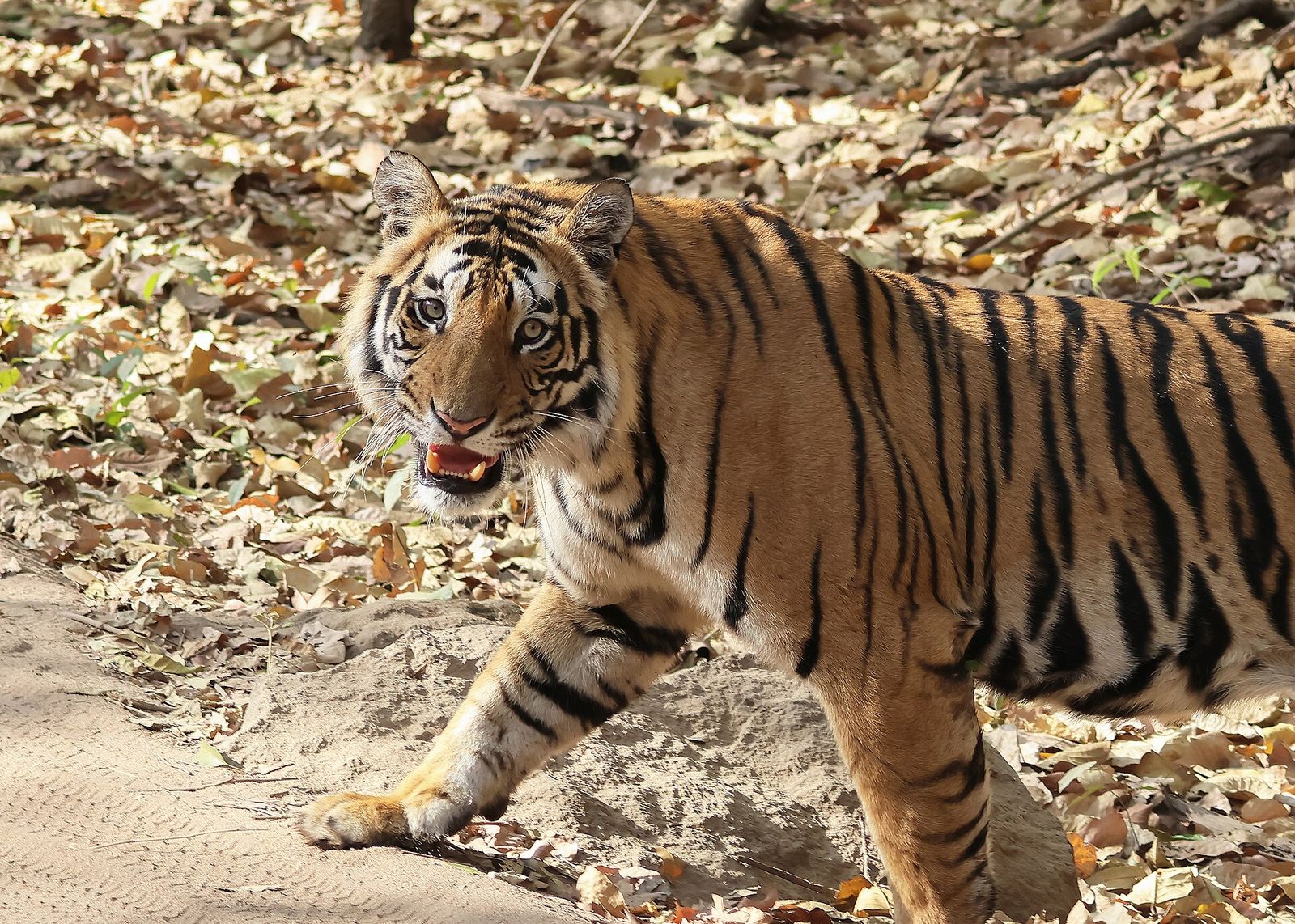
India's tiger forests, and why they close in the rains
Kanha, Bandhavgarh, Pench and their neighbours shut their core zones in monsoon. How to plan an honest tiger trip.
India is home to most of the world's wild tigers. The government's 2022 estimate, published in 2023 as the report Status of Tigers: Co-predators and Prey in India 2022, put the average at 3,682 animals, with an upper estimate of 3,925. The earlier figure of 3,167 is a minimum count based on camera-trap photographs; the larger figure is an estimate built from all the data, including signs such as pugmarks and scat. Madhya Pradesh leads the states with 785 tigers, followed by Karnataka with 563, Uttarakhand with 560 and Maharashtra with 444.
Many visitors go to the tiger reserves of central India, in particular Kanha, Bandhavgarh and Pench in Madhya Pradesh. They are good places for the purpose: forest, grassland and water within a manageable area, with trained guides and a strict system of safari zones. But the core zones are closed in the monsoon. Reports for recent years say the core areas of six Madhya Pradesh tiger reserves, including Kanha, Bandhavgarh and Pench, remain shut from 1 July to 30 September, while buffer zones stay open for tourism; the reserves reopen their core zones on 1 October, though in some years the reopening has slipped to mid-October. The reasons are practical and ecological: roads wash out, and the forest is breeding season for many animals.
That makes August an off-season for tiger safaris in this region, and you should not book a core-zone drive. If you are in the area, ask whether buffer-zone safaris are running. A buffer drive is a different experience; it is more likely to show deer, birds and the forest itself than a tiger, and a good guide will say so.
An honest tiger trip has a few rules. Book several safaris, not one; tigers are elusive, even in the best parks. Choose your zone and your vehicle with care, because reserves limit how many jeeps may enter and how long they can stay. Do not pressure the guide or the driver to chase a sighting or to stay beyond the rules; the reserve staff and the animal are better served by patience.
How to go well: use the official booking system for each reserve, carry your photo ID, listen to the guide, and visit villages and craft cooperatives around the park, where tourism income is most useful. Check the Madhya Pradesh Forest Department for current dates; they change from year to year.
Prices, dates, permits and rules change — approximate, verify before you travel. Researched from public sources; field verification pending.
Planning a journey like this?
Tell us the season and your pace — we'll shape it into a private itinerary.
Talk to a travel designer