
Assam in the wet: a closed park, and the stork villages that stay open
August is monsoon, and Kaziranga is closed to visitors. Here is what to do with Assam's wildlife country instead of waiting.
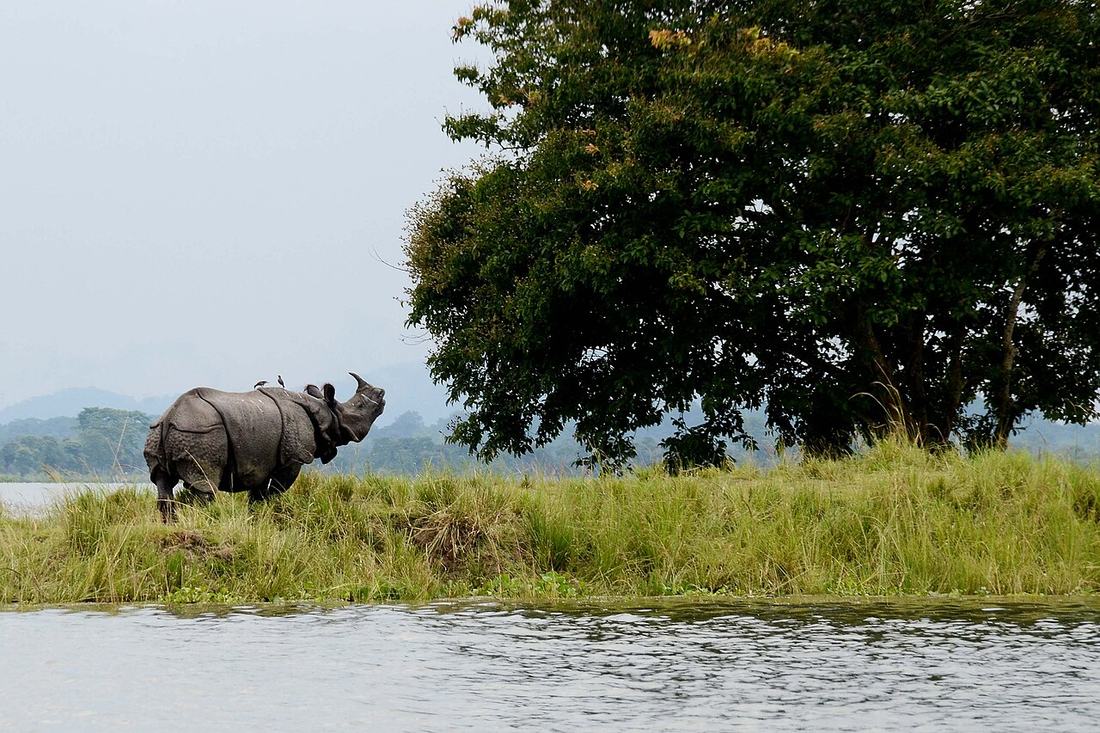
Most visitors know Kaziranga National Park as the place to see the one-horned rhinoceros. It was inscribed as a UNESCO World Heritage Site in 1985 and was declared a tiger reserve in the mid-2000s; sources differ on the exact year. It holds the world's largest population of one-horned rhinos, with more than 2,000 animals by recent counts. But in August, you cannot go there as a safari visitor. The park closes to tourists for the monsoon and reopens in the autumn; the Assam Forest Department announces the date each year, and in recent years it has been around the start of October.
The closure matters because the floods are part of the park's ecology. During high floods, as much as 70 to 80 per cent of the park can be under water for days at a time, and animals move to higher ground, including the Karbi Anglong hills to the south. They have to cross National Highway 37 to get there, which is why highway speed limits and animal corridors are a recurring conservation issue. A closed season is also a time to give the animals peace.
So what to do in Assam in August? First, rethink the trip: the wet season is lush, the Brahmaputra is wide and the crowds are small, but travel takes longer, and some roads and ferries are disrupted. Second, choose other forms of wildlife watching. In Kamrup district, near Guwahati, there are villages where the greater adjutant stork, called hargila locally, nests in village trees. The stork is among the rarest in the world, and the villages that protect it have become a model for community conservation. The People pages tell the story of the woman who organised them, Dr Purnima Devi Barman.
Third, plan for the reopening. When the park opens, bookings for jeep safaris in the central Kohora range fill early; the Western and Eastern ranges often offer quieter morning drives. Book through the official Assam Forest Department channels, and avoid operators who claim to guarantee a rhino sighting.
Guwahati, the gateway, is worth a day on its own. The Kamakhya Temple stands on Nilachal hill about 8 km from the city, the Assam State Museum is next to the railway station, and Umananda Temple sits on an island in the Brahmaputra. The river looks slow but has strong undercurrents; do not swim.
A word on the table: an Assamese meal traditionally begins with khar, an alkaline dish made with a filtrate of banana-peel ash, and the sour fish curry masor tenga is a signature dish. Try both before you leave.
Prices, dates, permits and rules change — approximate, verify before you travel. Researched from public sources; field verification pending.
Planning a journey like this?
Tell us the season and your pace — we'll shape it into a private itinerary.
Talk to a travel designer