
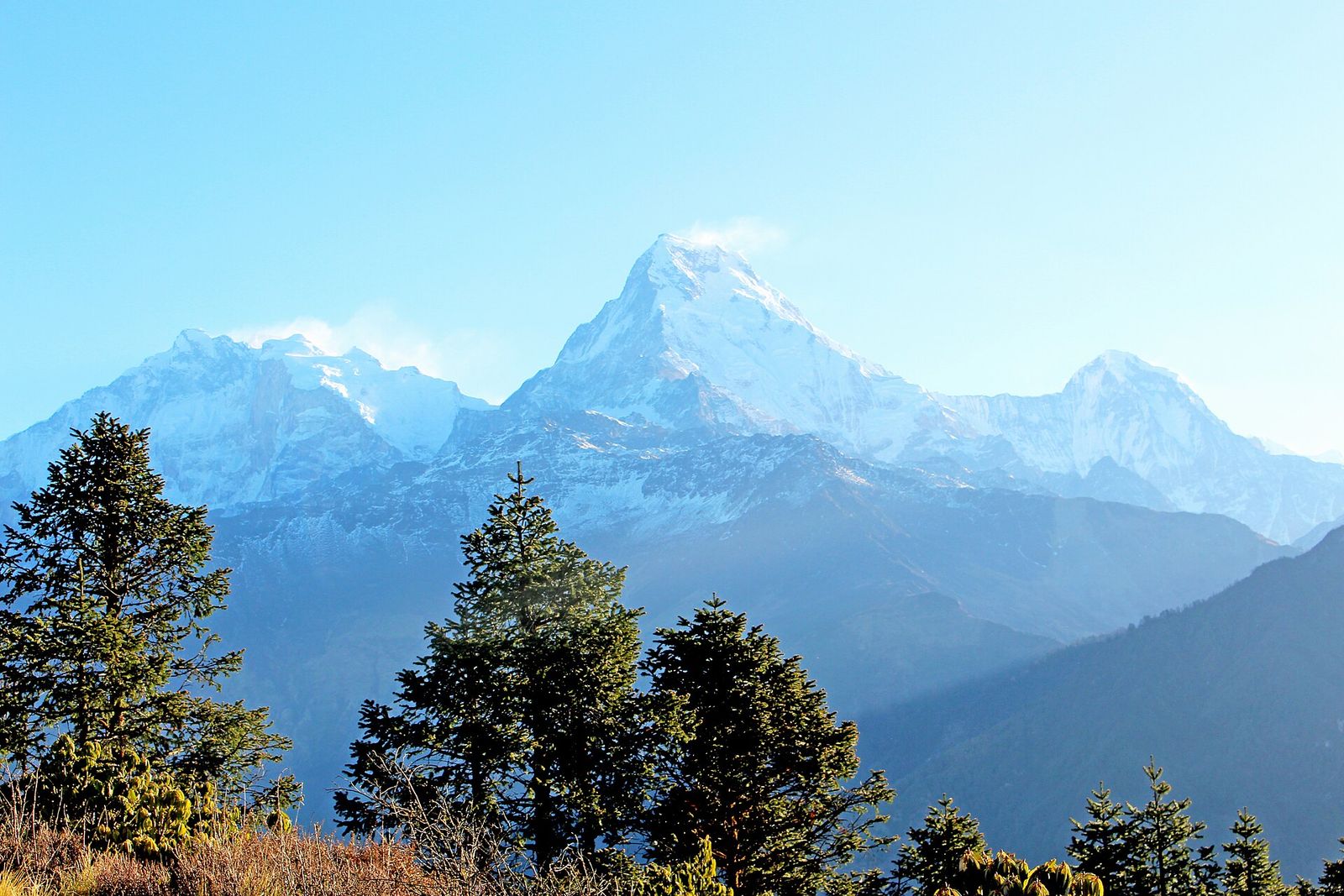
Nepal after the monsoon: an autumn walk toward Poon Hill
A short, popular route into the Annapurna Conservation Area, best walked when the rains have washed the air.
The Annapurna Conservation Area is Nepal's largest protected area. It covers 7,629 square kilometres and rises from about 790 metres to the summit of Annapurna I at 8,091 metres. Its trails include the Annapurna Circuit and the Annapurna Sanctuary. The monsoon runs from June to September, and the post-monsoon months of October and November are among the clearest, which is why the trails are busy.
For a first trek, the Ghorepani–Poon Hill route is a common choice. It climbs through villages and rhododendron forest to a viewpoint, Poon Hill, at roughly 3,200 metres, where the Annapurna and Dhaulagiri ranges appear at dawn. Most itineraries take four to five days from Pokhara. We have not checked the route with an operator, so treat the outline as a starting point and ask a licensed agency for the current plan.
Permits and rules change. Several sources give the Annapurna Conservation Area entry fee as NPR 3,000 for most foreign nationals and NPR 1,000 for the SAARC category, which includes India, with children under 10 exempt; we could not confirm this on an official page. Sources also disagree on whether the TIMS trekkers' card is still required for most Annapurna treks, with some saying it changed in 2023, so ask the Nepal Tourism Board office in Pokhara before you set out. Indian citizens can generally enter Nepal without a visa but must carry accepted identification; confirm with Nepal Immigration.
Hire a licensed guide or porter through a registered agency and pay fairly. Women guides and porters are increasingly part of the trekking workforce, and our People pages carry the story of one. Carry a reusable bottle and a bag for rubbish, and do not buy single-use plastic in the high villages.
How to go well: allow a buffer day for weather, take a good rain jacket even in the dry season, and acclimatise slowly; altitude sickness is a real risk above about 3,000 metres.
Prices, dates, permits and rules change — approximate, verify before you travel. Researched from public sources; field verification pending.
Planning a journey like this?
Tell us the season and your pace — we'll shape it into a private itinerary.
Talk to a travel designer