
New Zealand's Great Walks, and how to book one
A national network of multi-day trails, a hut-booking system that rewards early planners, and a river that has been recognised in law as a living whole.
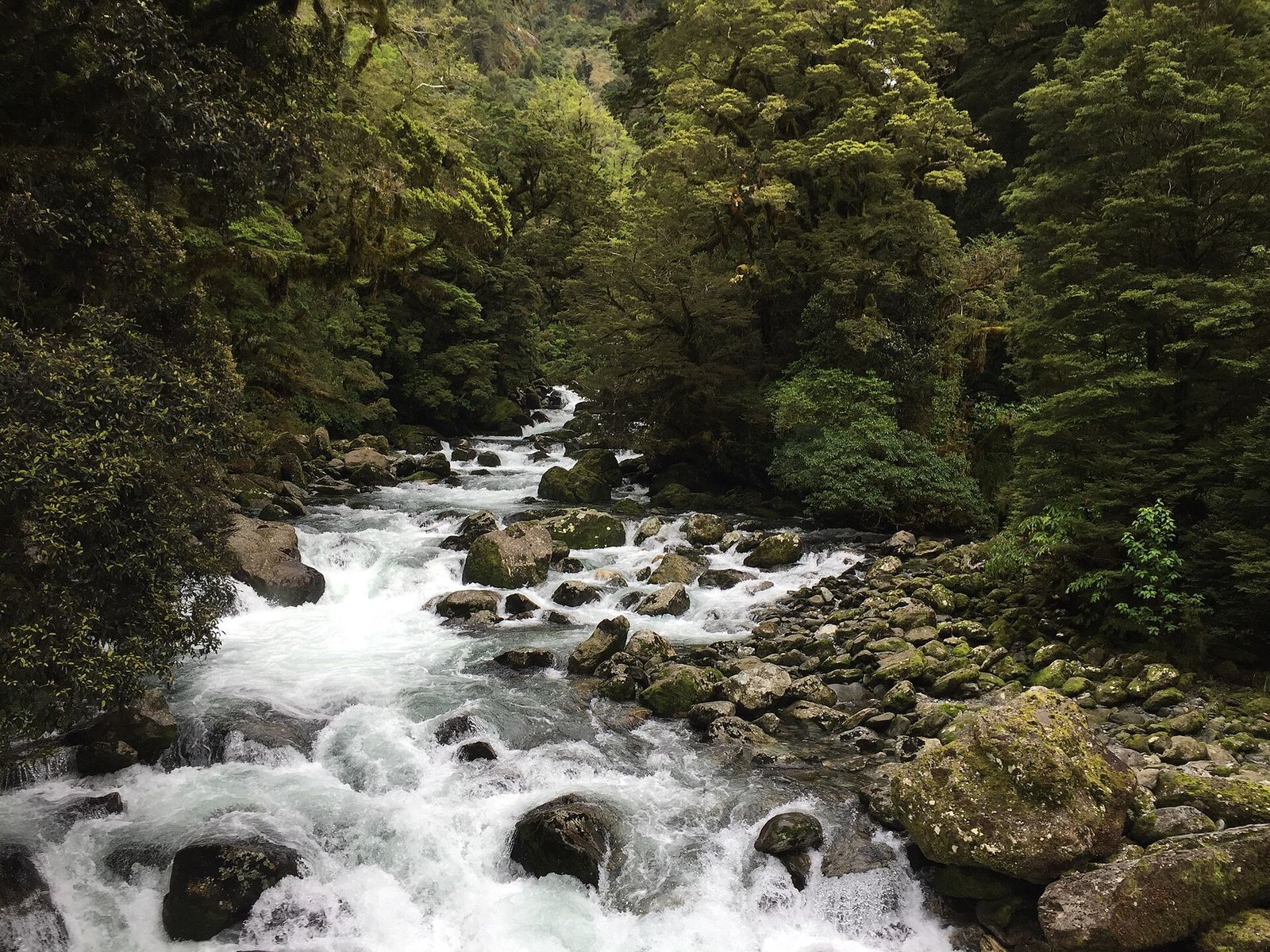
New Zealand's Department of Conservation manages a set of long-distance tracks it calls the Great Walks, and November is when the main summer season begins. The Milford Track, in Fiordland, is the best known. According to the department's own page, the Great Walks season for the track runs from 1 November to 30 April, and the last departure for the 2026–27 season is on 28 April 2027. Outside those dates the track is unmanaged, with fewer facilities and no ranger.
The Milford Track is walked in one direction only, over three nights and four days. Walkers start at Glade Wharf on Lake Te Anau and finish at Sandfly Point on Milford Sound. The daily distances on the department's page add up to about 53.5 kilometres, a figure we have summed ourselves rather than found stated. The high point is Omanui/McKinnon Pass at 1,154 metres, reached on the third day after a climb of more than 500 metres, followed by a long descent to the last hut.
Three huts, one per night, are the only places to stay; camping on the track is not permitted. The huts have bunks, mattresses, heating, toilets, basic cooking facilities and cold running water. They do not have cooking utensils or showers, so you need to carry a lot of the basics yourself. In the Great Walks season, you must book huts online in advance, and the department says that without a valid booking you may be turned away or charged a penalty.
Prices matter, and they differ by residency. The department's fees page for the Milford Track shows an adult rate of NZ$106 per person per night for New Zealanders and NZ$152 for international visitors, with half-price for children, for the 2025–26 season. Rates can change, so check the current schedule at booking.
The weather is part of the plan. Rainfall in the area can reach as much as 9,000 millimetres a year, and the department warns that cold, snow, wind and heavy rain can arrive at any time and that closures are possible. It also reports more than 57 avalanche paths on the track; in the Great Walks season it manages the risk to a low level, but it notes that avalanche risk can extend into December. Travel insurance is recommended.
Elsewhere in the network, the Whanganui Journey is a canoe trip on a river that New Zealand's Parliament recognised as a legal entity in 2017; the profile on our People pages explains how that happened. The point of mentioning it here is that New Zealand treats its outdoor places as more than scenery, and the booking system is one result: limited numbers, fixed itineraries, and an expectation that you carry your rubbish out.
Entry rules: Indian citizens generally need a visitor visa for New Zealand; the NZeTA electronic authority is for visa-waiver nationals. Reports in September 2026 said the visa application process was moving to an upgraded online system around the end of September or 1 October, though sources gave different dates. Check Immigration New Zealand before you apply.
How to go well: book early, since the most popular huts fill when the season's booking windows open; pack for four seasons in a day; tell someone your route; and follow the Māori and conservation guidance on the department's pages.
Prices, dates, permits and rules change — approximate, verify before you travel. Researched from public sources; field verification pending.
Planning a journey like this?
Tell us the season and your pace — we'll shape it into a private itinerary.
Talk to a travel designer