
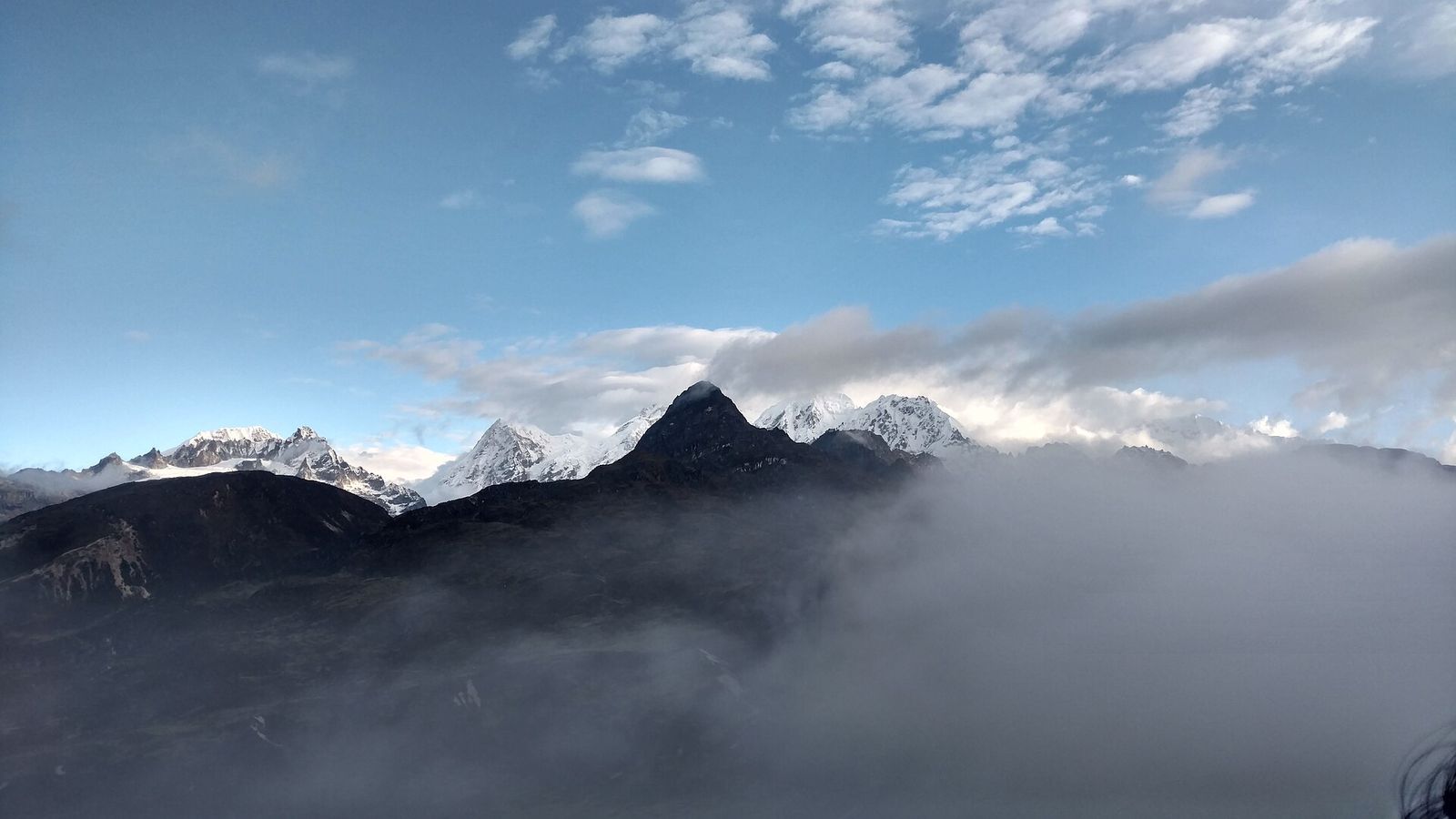
Khangchendzonga: Sikkim's sacred mountain
A national park, a World Heritage Site and a living deity. How to walk in the shadow of the world's third-highest peak with the respect it asks for.
Khangchendzonga, at about 8,586 metres the third-highest mountain on Earth, is more than a peak in Sikkim. It is regarded as a guardian deity by communities who live in its shadow, and local traditions place sacred valleys and lakes around it. The Khangchendzonga National Park, in the west and north of the state, is a UNESCO World Heritage Site, listed in 2016 for both its natural and its cultural significance, which is why it is one of the few mixed sites in India.
The usual way to meet the mountain is the trek from Yuksom, a small village in West Sikkim that was the site of the first coronation of a Sikkimese king in 1642, to Dzongri and onward to Goecha La. The route, usually done over a week to ten days with a guide, climbs through forests of oak and rhododendron, past yak pastures, to high viewpoints. Early on the trail you sleep at a few hundred metres higher each night, which suits the acclimatisation that these elevations demand. Local trekking guides, porters and cooks are mostly drawn from the villages near Yuksom, so booking through a Sikkim-based operator keeps the income local.
April and May are one of the two best windows for the high trails, the other being October and November. In spring the rhododendron forests flower, and the days before the monsoon are often clear in the early morning and cloudy by noon. Plan for cold nights and for mist rolling in by afternoon, so that you can rise early for views.
Permits are the part that most often catches visitors out, and sources disagree. Park entry permits are issued through the Sikkim Forest Department's office at Yuksom, and trekking companies advise carrying photo ID and passport-size photographs. For foreign nationals, trekking agencies say a Protected Area Permit and travel in a group of at least two through a registered Indian agency are required. A different travel guide says Indian citizens usually do not need a separate permit for most treks. We have not been able to confirm the exact current rules from a government source, so check with Sikkim Tourism and the Forest Department before you go.
There is a tradition to honour. When Khangchendzonga was first climbed, in 1955, the British team stopped a few steps short of the summit out of respect for the Sikkimese people's belief that the top is sacred. Many climbers since have followed the same custom. Walkers can follow a gentler version of it: leave no litter, do not shout or play loud music at lakes or shrines, and follow your guide's advice about where to camp and where not to.
For those who prefer valleys to trails, West Sikkim offers monasteries, villages and homestays around Pelling and Yuksom without a high-altitude trek. Whichever way you go, May is the month to start asking questions early, because permits, huts and guides are limited.
Prices, dates, permits and rules change — approximate, verify before you travel. Researched from public sources; field verification pending.
Planning a journey like this?
Tell us the season and your pace — we'll shape it into a private itinerary.
Talk to a travel designer