
Spiti: a cold desert of monasteries and homestays
Himachal's high valley asks for time and a little humility. The reward is a landscape where almost every village has its own story.
Spiti, in the north-east of Himachal Pradesh, is a high-altitude cold desert. Its villages sit between about 3,500 and 4,500 metres, and its landscape of pale mountains, river gravel and green barley terraces feels closer to the Tibetan plateau than to the Himalayan foothills. The name is said to mean the middle land, between India and Tibet.
The road in matters. The most reliable approach is from Shimla through Kinnaur, a long journey that can take a full day or more to reach Kaza, the valley's main town. The route from Manali crosses the Kunzum Pass and is seasonal, opening in late spring or early summer depending on snow, so check its status with local authorities rather than a travel blog. Both routes are subject to landslides, and the monsoon months make them less predictable.
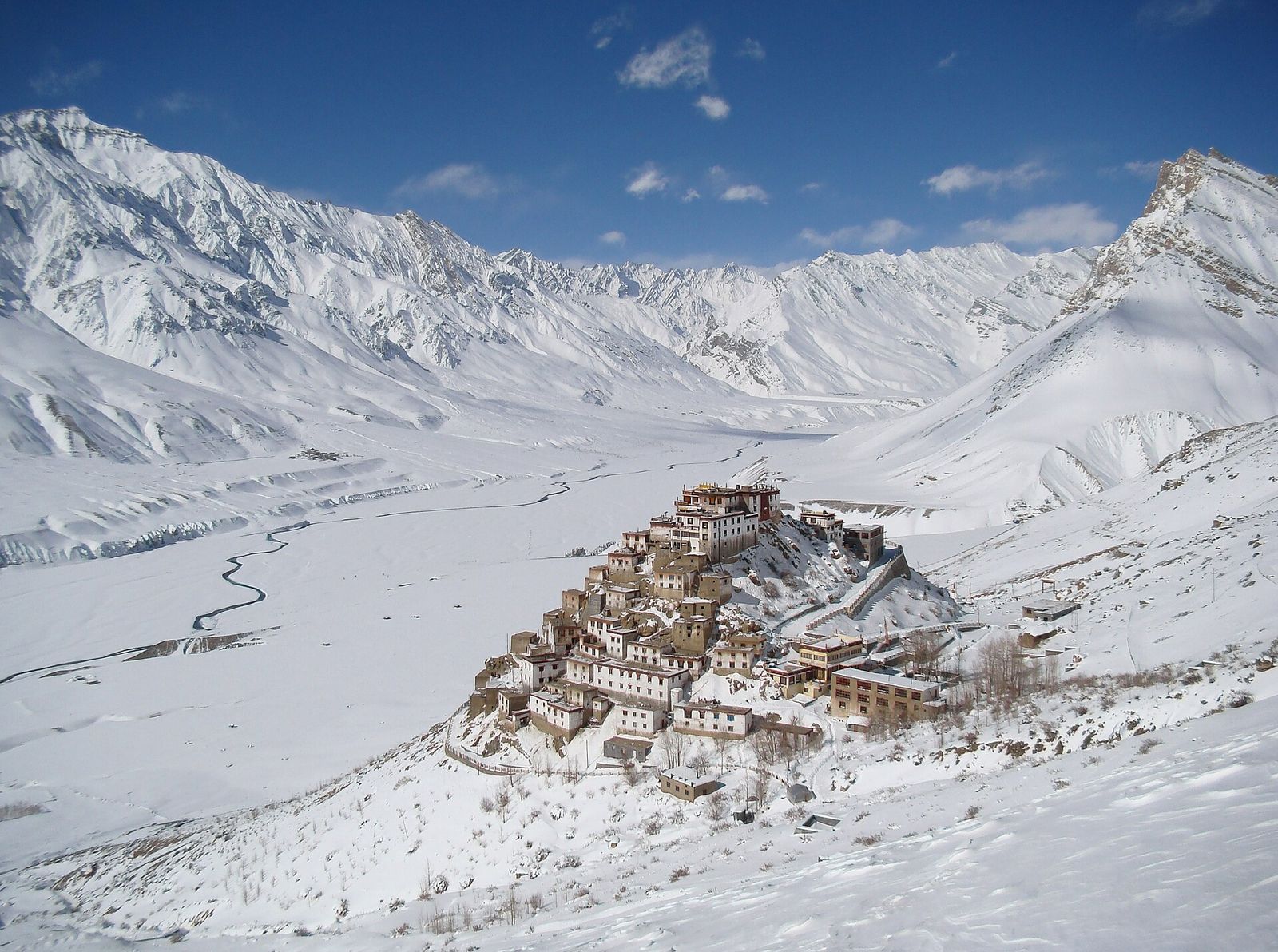
Culture is the draw. Key Monastery, perched above the river, is the largest in the valley. Tabo Monastery, in the lower valley, is among the oldest continuously active Buddhist centres in the Himalaya and is known for its ancient murals. Smaller villages such as Langza, famous for fossils, and Kibber and Komic, among the highest villages in Asia with road access, show how farming and herding adapt to altitude.
May is the beginning of the season. Spiti's tourism season runs from mid-May to mid-October, according to one of the valley's own tourism enterprises. Early in the season, nights are cold, many facilities open late, and the first days at altitude need as much care as in Ladakh: rest, hydrate and climb slowly. Mobile and internet connectivity is patchy, so tell your host your plans and carry cash.
Homestays are the best way to stay and the best way to give back. The social enterprise Spiti Ecosphere, whose co-founder is profiled in this issue, helped set up the valley's early homestays, which let visitors stay in village houses while the families keep the income. Ask your host about water, waste and the season's work, and be prepared for simple food, shared bathrooms and early nights.
A last note on care. Spiti's fragile environment is under growing pressure from traffic and plastic. Travel in shared vehicles where you can, carry out what you carry in, and treat the monasteries as places of worship.
Prices, dates, permits and rules change — approximate, verify before you travel. Researched from public sources; field verification pending.
Planning a journey like this?
Tell us the season and your pace — we'll shape it into a private itinerary.
Talk to a travel designer