
Meghalaya in the rains: root bridges and rules of the road
The Khasi Hills are among the wettest places on Earth, and the living root bridges grow best in the wet. How to visit them without harming them.
Meghalaya's name means the abode of clouds, and the Khasi Hills around Cherrapunji, known locally as Sohra, and Mawsynram are famous for some of the highest rainfall anywhere. The rain shapes everything here: the waterfalls that thunder off the plateau, the green gorges and the unusual architecture of the living root bridges.
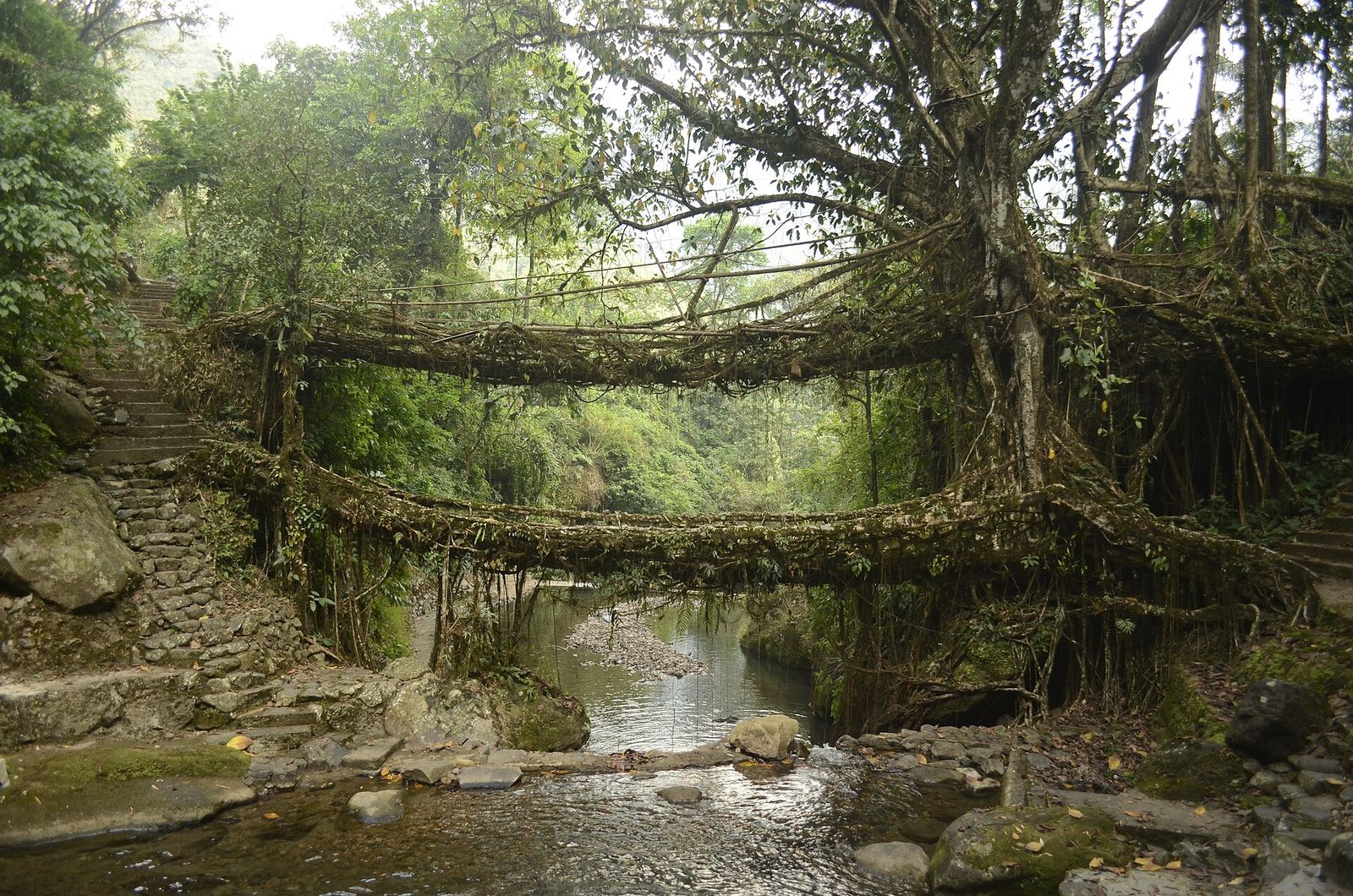
The bridges are grown, not built. Reporting by FactorDaily in October 2025 describes how they come from the aerial roots of the Indian rubber fig, Ficus elastica. Roots are guided across a gorge over a bamboo scaffold, usually in the monsoon when they are soft and flexible, and fed with forest compost; over years the strands fuse together. According to the same report, a bridge takes roughly ten years to bear a light load, about twenty-five to become stable for daily use, and fifty years or more to mature, and some last for centuries. More than a hundred living root bridges are said to exist in the Khasi and Jaintia Hills.
The best-known bridges, such as the double-decker bridge near Nongriat, are reached on steep stone stairways with thousands of steps. In the monsoon, those steps are slippery, rivers rise quickly and landslides can close the roads. Many local guides recommend visiting the most popular bridges outside the heaviest rains, and you should always follow local advice about whether a trail is safe. If the guide says no, the answer is no.
The other excellent monsoon sights are easier. The waterfalls near Sohra are at their fullest, the Mawlynnong village trail is a short, gentle walk, and the Umngot river at Dawki, where the water is famously clear, is calm enough for boating in the right weeks. Caves such as Mawsmai are open in many seasons, but check with the local authorities for water levels.
Because the bridges are living structures, the way you walk on them matters. Crowds are a growing problem. Morningstar Khongthaw, a Khasi conservationist profiled in this issue, began as a promoter of bridge tourism and came to see crowds as harmful, and he now works on growing and protecting new bridges. Visit with a local guide, stay on marked paths, follow any limit on the number of people on a bridge, and do not carve or pull at the roots.
A short note on language and manners helps. The Khasi, Jaintia and Garo communities of Meghalaya follow matrilineal traditions, in which family name and property pass through the mother, and the villages of the Khasi Hills are organised around clans and a village council. Visitors are guests of these communities. Greet people, ask permission before entering a village path or photographing a household, and pay the small fees that villages charge for trails and parking, since these often fund the upkeep of the paths themselves.
Stay in homestays in Sohra or Mawlynnong where you can, buy food and crafts locally, and check Meghalaya Tourism's current guidance on any rules for visitors. Roads between Shillong and Sohra are generally good, but landslides on hill roads are common in the monsoon, so leave time to spare.
Prices, dates, permits and rules change — approximate, verify before you travel. Researched from public sources; field verification pending.
Planning a journey like this?
Tell us the season and your pace — we'll shape it into a private itinerary.
Talk to a travel designer